

Next school year Fox C-6 district parents will be able to monitor what books their children check out at school libraries.
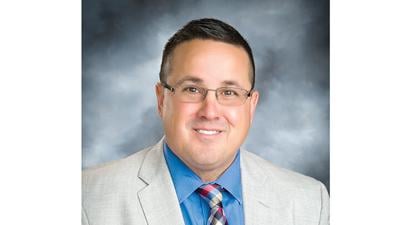
Superintendent Paul Fregeau said May 17 that the district will put a new program in place that parents may sign up for and receive email alerts about the books their children check out.
“It is similar to directory information that parents can opt out of,” Fregeau said. “They can opt into this being shared with them.”
The creation of the book-alert system was spurred by a rash of book challenges the Fox district received this school year.
District officials said they received 14 forms this school year requesting that library materials be reconsidered, for a total of 12 book challenges.
School officials said previously the district typically did not receive library book challenges in any given school year.
As of Monday, May 23, the books that had been challenged this school year included “The Perks of Being a Wallflower” by Stephen Chbosky; “The Babysitters Club: Boy Crazy Stacey” by Ann M. Martin; “The Absolutely True Diary of a Part-time Indian” by Sherman Alexie; “Fences,” a play written by August Wilson; “How to be an Antiracist” by Ibram X. Kendi; “The Testaments” and “The Handmaid’s Tale,” both by Margaret Atwood; “Living Dead Girl” by Elizabeth Scott; “19 Minutes” by Jodi Picoult; “The Haters” by Jesse Andrews; “This Book is Gay” by Juno Dawson; and “Something Happened in Our Town” by Marianne Celano and Donald Moses.
The Fox district’s last day of school is Friday, May 27.
Four of the challenges have been reviewed, and Fox did not remove any of the challenged material.
However, “Something Happened in our Town” can only be checked out with parent permission, and “The Babysitters Club: Boy Crazy Stacy” is now only available to students in third grade through fifth grade. No restrictions were placed on “The Perks of Being a Wallflower” and “The Absolutely True Diary of a Part-time Indian,” according to district officials.
The rest of the books are still being reviewed.
Fregeau said the district created its own book-alert system.
“I don’t know how people will react to it,” he said. “I think we have been responsive to a part of our community that has asked for more transparency. This will provide that.”
Fregeau said the system will not prohibit individual students from checking out books but will just alert parents about the books their children have checked out.
He also said the district does not plan to create a book-rating system that would restrict students’ reading choices based on parents’ wishes.
“We have our book challenge process if parents have concerns about books,” he said.
When a book is challenged, the principal of the school where the book is available forms a review committee consisting of the principal, librarian, teacher, the patron of the district and, if necessary, a district administrator, according to district policy.
The committee reviews the book and submits a report to the principal with a recommendation to either keep the book without restrictions, keep the book with restrictions or remove it. If the person who challenged the material is not satisfied with the committee’s decision, the complainant may appeal the decision in writing to the superintendent.
The superintendent then informs the Board of Education about the appeal and presents the review committee’s recommendation, and board members make the final decision about the book.
Reading material challenges peaked recently, according to the American Library Association’s Office for Intellectual Freedom.
On April 4, the ALA announced it tracked 729 challenges to library, school and university materials and services in 2021, resulting in more than 1,597 individual challenges or removals.
Most targeted books were by or about Black or LGBTQIA+ persons, the organization said on its website, ala.org.
“The 729 challenges tracked by ALA represent the highest number of attempted book bans since we began compiling these lists 20 years ago,” ALA president Patricia Wong said. “We support individual parents’ choices concerning their child’s reading and believe that parents should not have those choices dictated by others. Young people need to have access to a variety of books from which they can learn about different perspectives.
“So, despite this organized effort to ban books, libraries remain ready to do what we always have: make knowledge and ideas available so people are free to choose what to read.”