

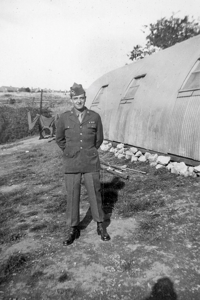
Gayle Fogarty of Arnold wrote about her late father, Sidney J. Vaucher, and his military experience. She believes the photos are from 1943 and taken at Fort Bragg in North Carolina while Vaucher was in training.
“My father Sidney J. Vaucher was born in Sulphur Springs, Jefferson County, Mo., in 1917. As his family’s eldest son, he had to drop out of high school to provide for his mother and siblings after his father died. Even though he was the family breadwinner, he was drafted into the U.S. Army in February 1943. Sid, as he was known, served with the 321st Glider Field Artillery Battalion which was part of the 101st Airborne Division.
“Dad received training as a radio operator at Fort Sill, Okla., and also trained with his battalion at Fort Bragg, N.C. While at Fort Bragg, my father began training as a paratrooper. He wrote home that he made two perfect jumps but got ‘banged up’ on his third jump and was not allowed to continue that training. This turned out to be a blessing since most of the men in his class did not return home.
“Dad served overseas for more than two years in Europe – primarily in Holland, France, Germany and Austria. His most memorable service came during the Battle of the Bulge at Bastogne where U.S. troops were surrounded by German forces at Christmas in 1944. He asked me to take him to see the movie ‘Patton’ when it came out in 1970. It was then I learned that it was Gen. Patton’s Third Army who had come to the rescue of the surrounded American troops.
“My father seldom spoke of his military service. You would never have known that he received the Bronze Star Medal in May 1945. It was given for his heroic actions as a radio operator. He risked his personal safety to go beyond the front lines and radio the enemy’s position to the artillery battalion for successful firing. He was honorably discharged in November 1945. He returned home where he married my mother Ruth in 1950 and helped raise me, his only child. He died in 1971 at the age of 54. He was a kind, caring man, and I am so proud he was my dad.”

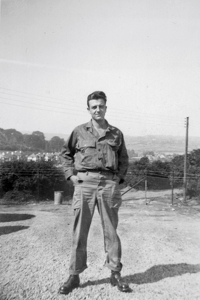
Gayle Fogarty of Arnold wrote about her late father, Sidney J. Vaucher, and his military experience. She believes the photos are from 1943 and taken at Fort Bragg in North Carolina while Vaucher was in training.

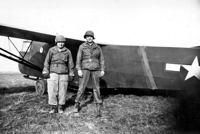
Gayle Fogarty of Arnold wrote about her late father, Sidney J. Vaucher, right, and his military experience. She believes the photos are from 1943 and taken at Fort Bragg in North Carolina while Vaucher was in training.

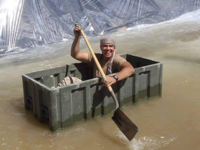
Pictured is the late Barry William Light II of Herculaneum in a trench in Ghazni, Afghanistan.
Light was from Herculaneum and served in the Navy from 2008-2014. Light was a first class petty officer with Naval Mobile Construction Battalion 15, “or ‘Seabees’ for short,” said Mariah Light, Light’s wife.
“Seabees combine heavy duty military construction with combat training, building critical infrastructure in the world’s most challenging and hostile environments,” Mariah said. “He would tell stories of building a mission-critical runway in the arid Ghazni mountains of Afghanistan, eating ice cream during a firefight and sharing dinner in the home of a local Afghan family. His most memorable moment in service was attending the birth of his first son via Skype while deployed in Iraq.
“Before his military service, he played football and ran track at Herculaneum High School, qualifying for state in wrestling.”
Light was born Aug. 19, 1988, and died May 29, 2021. In addition to his wife, he is survived by three sons: Peyton, William and Waylon; and his parents: Barry Light Sr. and Linda Radford.

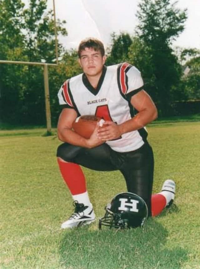
Pictured is the late Barry William Light II of Herculaneum who served in the Navy from 2008-2014. Barry played football and ran track while at Herculaneum High School.

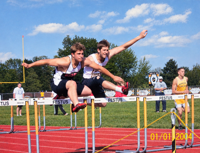
Pictured hurdling in 2004 is the late Barry William Light II, left, of Herculaneum who served in the Navy from 2008-2014. Barry played football and ran track while at Herculaneum High School.

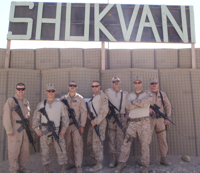
The late Barry William Light II of Herculaneum, third from left, and the "Shukvani seven."

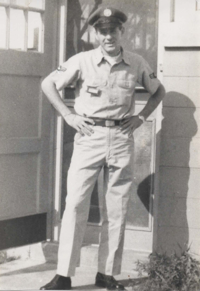
James “Jim” William Davis Jr. of Dittmer at the barracks at Volk Field Air National Guard Base in Camp Douglas, Wis. Davis was there for field training in the summer of 1961.
James “Jim” William Davis Jr., 89, of Dittmer served in the Missouri Air National Guard from 1956-1962, said Davis’ daughter, Mechelle (Davis) Wolfe.
“He enlisted in the Missouri Air National Guard on July 21, 1956, at Jefferson Barracks in south St. Louis County,” Wolfe said. “He and his younger brother, Charles Davis, enlisted together. Jim served in transportation as a military truck driver and vehicle dispatcher for staff cars, trucks, jeeps, wreckers, GM coaches and other vehicles. His rank was airman first class E4 (which is now called senior airman).”
Davis also shared a story from his military days:
“Convoying back to St. Louis with the Missouri Air National Guard from summer field training in Fort Bragg, N.C., in 1960, we spent the night in Nashville, Tenn. The day we arrived in Nashville, four of us were sent out to buy fan belts for the trucks. One of the trucks had a broken fan belt, and we had to go to parts stores to find what we needed.
“While we were out, the four of us decided to go to the Grand Ole Opry at Ryman Auditorium. We went in, and they had two shows: an early show and a late show. The early show was sold out, so we bought tickets for the late show, which were red tickets. We all went out looking for the truck part, then we went back to the Grand Ole Opry well before the early show started. There was an elderly security guard there who recognized one of the other guys in my group, and the two of them got to talking. When the guard saw that we had red tickets for the late show, he said, ‘Come back in 30 minutes, and I’ll get you into the early show.’ We went back 30 minutes later, and the elderly guard wasn’t there.
“Instead, there was a big, burly security guard that looked at our tickets and said, ‘You guys know better than that, trying to get in the early show.’ Then the elderly gentleman come shuffling up real quick and said, ‘Wait a minute, I promised these guys I would get them in.’ There were seats available, but we had to sit way in the back.
“Some of the performers we saw that night were Grandpa Jones, Stringbean, Minnie Pearl, Bashful Brother Oswald, and the feature performer was the famous guitar player Chet Atkins.
“All of the commercials were performed live. They didn’t take breaks or anything. A group would come out and sing a little ditty advertising a product. I remember three men came out advertising Duck Head Overalls, singing it in ‘duck language.’ It sounded like a bunch of ducks. I had no idea what they were saying, but there was a tune and you paid attention to it. I had heard it before on the radio on the Grand Ole Opry radio show.
“After the show, I went to the gift shop and bought a little ceramic poodle for my mom and carried it all the way back home in my duffel bag. Mom displayed that little ceramic poodle on a shelf in her house for decades, until she passed it back to me when she moved to a retirement home.”

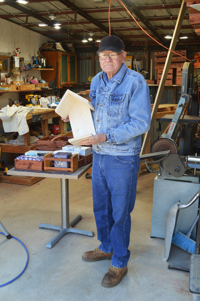
Davis in his home woodshop in 2024. Davis builds wooden crafts and sells them at the Cedar Hill Farmer and Vendor Market and other local fairs.

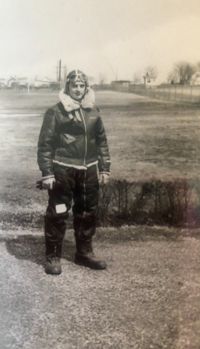
Mike Zavorka, 78, of Hillsboro sent a picture of his father, Bud Zavorka, in 1942 at a flight school in Texas. “He was a B-24 pilot in the Army Air Corps,” Zavorka said. “In 1944, he was shot down over Nazi Germany and was a POW for 10 months.” Zavorka said Bud died 20 years ago.

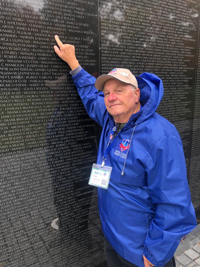
Zavorka sent a picture of himself during an Honor Flight trip to Washington, D.C. “I was with the 377th Security Forces Squadron at Tan Son Nhut AB Vietnam in 1969,” Zavorka said.

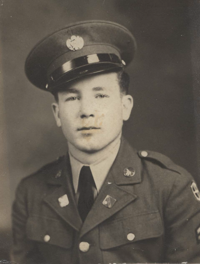
Nancy Nicholson Wood, 80, of De Soto sent a picture of her father, Buford Landen Nicholson.
“My daddy started his service career by telling the De Soto National Guard unit he was 17, but he was only 16 years old. He rose to the rank of sergeant,” Wood said.
“Then Pearl Harbor was bombed by the Japanese Army, and daddy’s unit was sent to Fort Lewis, Wash. After training, he was shipped to Europe and served in the Rhineland Campaign as a foot soldier marching across Germany.
“My mother, Martha Mae Ballard, told him she would marry him if he came home from the war, which he did. They were married Dec. 14, 1944. Their marriage lasted long enough for me, Nancy Kay Nicholson Wood, to be born.
“Daddy worked for the Missouri Union car shops in De Soto. Then he enlisted in the U.S. Air Force until his death on April 11, 1962, at age 39. Daddy never talked about WWII.
“He was very conservative. I was 15 years old when he passed, but when I was only 12 years old he said, ‘Now Nancy, I know you will want to put makeup on, but please don’t put on that bright red lipstick.’ I laughed and said, ‘Don’t worry Daddy, I don’t like red lipstick.’ ‘Candy Pink’ or ‘Cotton Candy’ was popular for teenagers then. I didn’t wear much makeup at the age of 15, but I will never forget that time. He’s been gone 64 years, and I still miss him.”

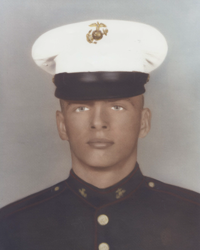
Nancy Nicholson Wood, 80, of De Soto said her De Soto High School class of 1964 lost three classmates in the Vietnam War: Ronald Filkins, James Gaetz and Darrel Pierce.
Ronald Filkins was a Marine and died on July 20, 1966, in Vietnam. “He has been gone but not forgotten for 60 years,” Wood said.
“Ronnie was in our high school yearbook as the ‘Crazy Twister.’ The record ‘The Twist’ by Chubby Checker came out in 1961 on ‘American Bandstand.’ Ronnie was always my partner doing the twist at the Bell Acres Pool Hop on Friday nights.
“Dr. Charles Owens, our classmate Terry Owens’ father, built the pool and concession stand in the 1960s on Highway Y just off Highway 21. It’s all gone now in 2026, but for years us teenagers loved to swim. Pool hops were on every Friday evening.
“My mother sent my aunt and uncle out to the pool hops to watch what was happening there; she had heard there was ‘lewd’ dancing there. ‘The Twist,’ I said to Mom. ‘You don’t even touch each other.’ I laugh to this day about this story.”

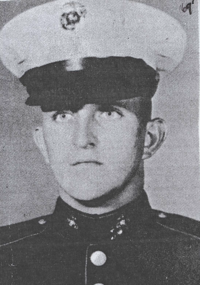
Nancy Nicholson Wood, 80, of De Soto said her De Soto High School class of 1964 lost three classmates in the Vietnam War: Ronald Filkins, James Gaetz and Darrel Pierce.
James Gaetz was a Marine and died on March 16, 1967, in Vietnam. “Jimmy went to St. Rose of Lima school, then to DHS for four years, graduating with us in 1964.” Wood said.
“Jimmy was one of the most handsome young men and a sweet person, too.
“In the winter, sled riding on the many hills in De Soto was very popular. While sled riding on Jimmy’s block on Third Street, Jimmy veered into some bushes. When we got off under them, he gave me a kiss. To me, it was just a spur of the moment, coming out of nowhere. I actually took a picture of the bushes at the house; I have it and the story in my memory book.
“Jimmy enlisted in the United States Marine Corp. through the buddy program with Keith Smith, another DHS class of 1964 graduate, and was sent to Camp Penelton in California. Then Jimmy was sent to Vietnam, but Keith stayed in California, training Marines that would be sent to Vietnam.
“Keith Smith’s late wife, Deanne Ray, had told me that Keith never got over Jimmy’s death. Keith died in 1994 at age 47, another casualty of the Vietnam war.”

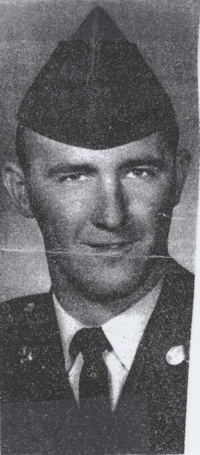
Nancy Nicholson Wood, 80, of De Soto said her De Soto High School class of 1964 lost three classmates in the Vietnam War: Ronald Filkins, James Gaetz and Darrel Pierce.
Darrel Pierce died on Nov. 8, 1969, in the Củ Chi District of Ho Chi Minh City, Vietnam, while serving in the Army.
“The NVA (North Vietnamese Army) and Viet Cong had tunnels under the ground, and men and women in their army were trained to kill the U.S. soldiers when they heard them marching above,” Wood said.
“In a book I read, the authors interviewed people from north and south Vietnam and the Viet Cong. It told of one girl who, at the time of war, was 18 years old, trained to come out of the tunnels and shoot as many U.S. soldiers she could, then escape back to the tunnels. It was 20 years after the war and she said, ‘I would do it again today if I was ordered to do it. Such is war.’”

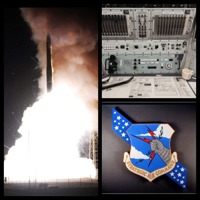
From 1983-1987, John T. Parker served in the United States Air Force at Grand Forks Air Force Base in North Dakota, supporting the nation’s Minuteman III intercontinental ballistic missile mission.
Parker served as an instructor with the 321st Strategic Missile Wing’s Directorate of Training and as a missile combat crew commander with the 448th Strategic Missile Squadron, including duty in the Alternate Command Post.
His service involved tremendous responsibility, demanding technical knowledge, discipline and constant readiness. But when Parker reflects on those years, what stands out most is not the equipment or the mission itself. It is the people.
“The most meaningful part of my time on a missile combat crew was the camaraderie with a group of exceptional, dedicated, intelligent professionals,” Parker recalled.
That shared commitment created a bond built on trust, teamwork and the knowledge that every crew member had an important role to fulfill. As an instructor, Parker helped prepare airmen for the demands of the mission. As a missile combat crew commander, he experienced firsthand the importance of sound judgment and unwavering professionalism.
One particularly memorable part of his service was participating in GT101GB, the test launch of the Minuteman III missile. The launch represented the technical precision and teamwork behind the nation’s strategic deterrence mission.
During the Cold War, missile crews worked largely out of public view, carrying out duties intended to help deter a nuclear conflict. Their work required vigilance and preparation, even when the world beyond the missile complex seemed far removed from their responsibilities.
Parker went on to complete 21 years of Air Force service, retiring as a major. The lessons he learned—integrity, accountability, preparation and service to others—continued to influence his life long after he left active duty.
As the nation honors its veterans, Parker remembers the years at Grand Forks with gratitude, particularly for the exceptional people with whom he served. For him, the enduring legacy of military service is not just the mission accomplished, but the bonds formed among those who carried it out together.

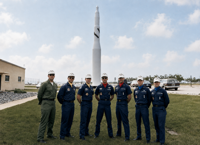
John T. Parker of High Ridge served in the Air Force and participated in a test launch of the Minuteman III missile shown here.

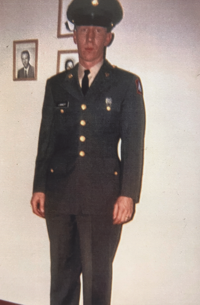
Frank Lammert of Arnold in September 1964 after boot camp at Fort Leonard Wood.
Lammert served in the Army from July 1964 to July 1966 and worked in ordnance supply in Vietnam. “I lived in a station in an old rice mill,” Lammert said. “Weather was extremely hot. We ate C-rations from 1944. I saw combat every day while I was in Vietnam.”

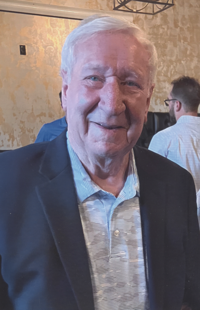
Frank Lammert of Arnold in September of this year.

Michael “Mike” Gross of De Soto in a photo taken in about 1969.
Gross was born in 1948 in St. Louis and served in the Vietnam War from 1969-1970, said his daughter, Becky Buehl of Imperial.
“He served as a sergeant in the Army in the 199th Light Infantry Brigade,” Buehl said. “He has since been the keynote speaker at their reunion events and served on several committees. He’s also a member of the De Soto Amvets.
“He earned items including a Bronze Star, Army Commendation Medals, two Purple Hearts, the combat infantry badge, Vietnam service and campaign medals, good conduct medals, national defense medals and even medals from the Vietnamese government.”

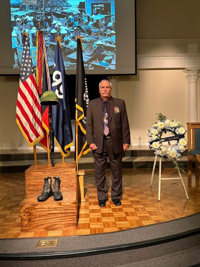
Michael “Mike” Gross of De Soto after speaking at a 199th Light Infantry Brigade reunion in 2023.

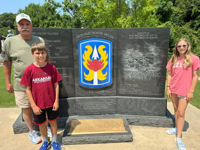
Michael “Mike” Gross of De Soto with his grandchildren, Sydney and Mason Buehl of Imperial, at the 199th Light Infantry Brigade memorial in 2023.

Tom Carpenter of Hillsboro served in the 101st Airborne Division (Air Assault) during the Vietnam War from 1968-1969.
Early in my tour of duty, I witnessed from the high hilltop of Firebase Hill 88 (88 meters above sea level) a night operation in a village below. I visually followed a South Vietnamese Army platoon enter the village from several different directions and accidentally fire upon each other, resulting in several dead and wounded of their own. Watching this happen made a big impression on me regarding night movements and operations. Friendly fire incidents are also called fratricide and common in all wars.
Most of us were constantly concerned about friendly fire incidents and often took procedures to minimize the risks of getting our own people killed or wounded by our own fire power. We mostly operated within a free fire zone so the chances of meeting an enemy were often great.
In retrospect, we knew the enemy had enough spies and lookouts among the villagers that we were watched most of the time, day and night. Even when we were not near the villages but in the boondocks and in enemy territory, the enemy would place lookouts along our “avenues of approach.” These enemy were called “trail watchers” and often they would be alone but there to provide a first alert regarding our presence. If possible, their one shot would be aimed directly at us and sometimes wounding or killing us. Most of the enemy trail watchers and snipers would fire their weapon once (once was the signal) then instantaneously flee the area and live to fight another day.
I am happy to say that I never had any of my men seriously wounded or killed by fratricide. Most of the soldiers served their country extremely well and they are proud of their service and would do it again if ever needed.
Yours In War, In Peace, In Christ
Ranger 1LT Tom Carpenter