




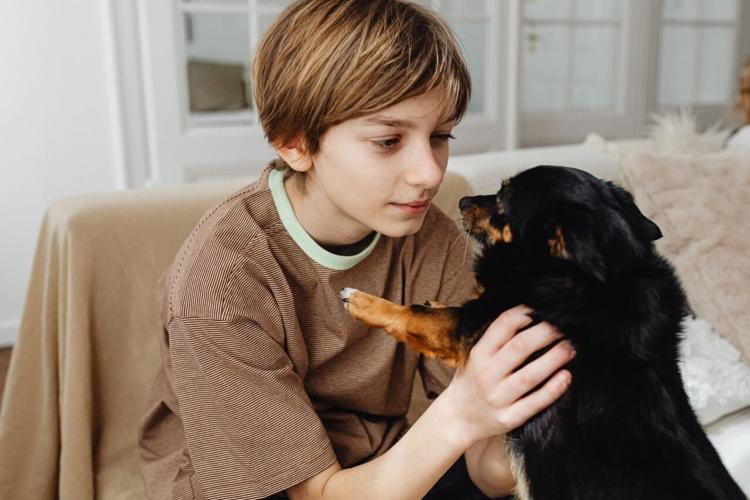

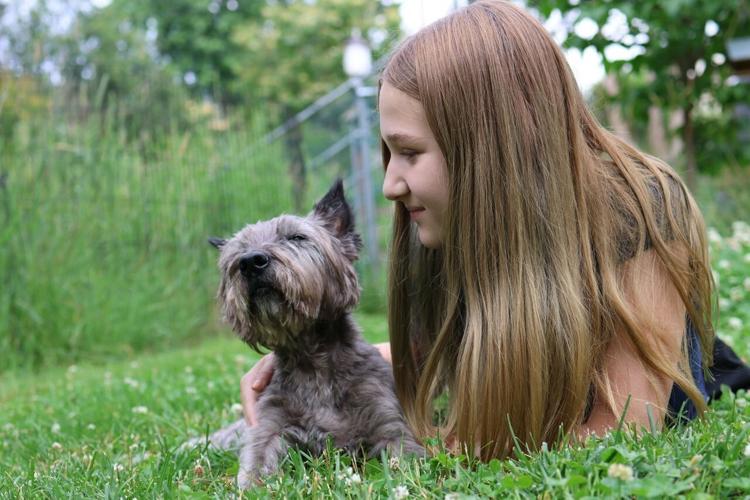

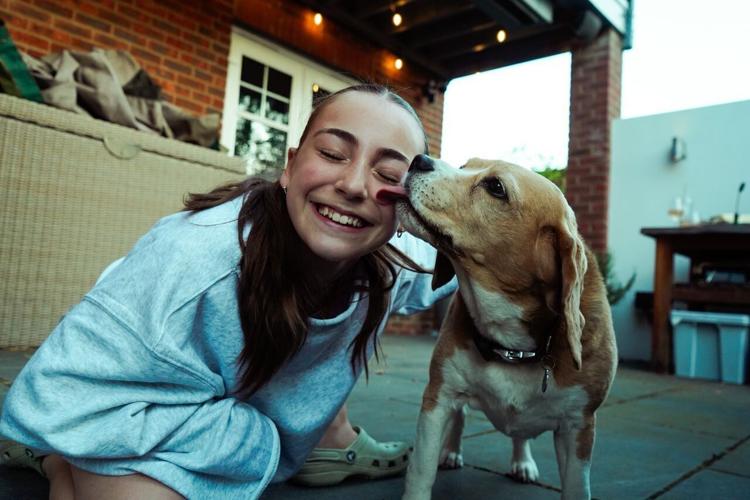




(Photo by Perro Cacahuate via Pexels)
By Stephen Beech
Dogs can help teenagers cope with stress, according to new research.
Four-legged friends enable adolescents to deal with social anxiety, suggests the study.
Previous research has shown that around one in 10 teenagers experience social anxiety — persistent and disruptive worries about being judged by their classmates and other peers.
The new American study of adolescents with social anxiety found that certain qualities of teens' relationships with their pet dogs were associated with healthier ways of coping with peer-related stress.
Researchers from Cummings School of Veterinary Medicine at Tufts University, Massachusetts, analyzed survey responses from 514 American teenagers aged 13 to 17 and a parent of each teen surveyed.

(Photo by kaboompics via Pexels)
The team examined whether specific aspects of the teen-dog relationship — such as affection, companionship, caring for the dog, emotional support, friction and viewing the dog as a substitute for people — were linked to different coping styles.
The findings, published in the Journal of Adolescence, suggest that the nuances of a teen's unique relationship with their dog may affect how a pet pooch contributes to healthy development, sometimes in unexpected ways.
For example, the research team expected that feeling emotional support from a dog would be linked more often to healthier coping strategies and less often to less healthy ones.
However, the results indicated the opposite: feelings of emotional support were less likely to be associated with positive thinking and more likely to be associated with persistently dwelling on negative thoughts.
The research team undertook the study to assess how dogs may help teens cope with social stressors in a positive way during a life stage that can feel like an emotional rollercoaster.
Study senior author Megan Mueller said: "During adolescence, teenagers develop their sense of self.
"Teenagers undergo a natural shift, with peers replacing parents as their primary relationships.

(Photo by Jordan Heinz via Pexels)
"There's naturally some emotional churn during this transition, which can cause a lot of anxiety for some kids.
"Dogs in many ways bridge the space between family and peers.
"They're obviously not your parents, but they're part of the family unit and may serve as a familiar source of comfort.
"We were curious if relationships with companion animals, and dogs in particular, may be one way of supporting effective coping through social support and emotion regulation."
The researchers selected for the study teenage participants with high levels of social anxiety.

(Photo by Luca Vaccaro via Pexels)
Both teens and parents responded to questionnaires collecting data about the youngster's relationship with their dog and how the teen copes with stress from peers.
The research team used statistical models to identify links between specific aspects of the dog-human relationship and various coping behaviors reported by the teens and parents.
Study lead author Nicole Mason, a Ph.D. student at Cummings School, said: "We wanted to see if certain dog-relationship qualities were associated with either productive or less-effective coping strategies."
The findings showed that companionship and caring for the dog both were linked to adolescents coping with peer stress in healthier ways — such as through problem solving, positive thinking, emotional regulation and emotional expression.
Feeling affection toward a dog was not significantly associated with either healthier or less-healthy coping styles.

(Photo by Hugo Martínez via Pexels)
Friction — such as getting frustrated over a dog's shoe-chewing habit — was linked to less-healthy coping strategies for peer stress, such as avoidance, denial, rumination and emotional numbing.
Viewing dogs as substitutes for people — for example, reporting that the pet dog is a more important friend than any peer — was also linked to less-healthy coping strategies.
Mueller, director of the Pets and Wellbeing (PAW) Lab at Cummings School, said: "One possible explanation is that a dog becoming a teen's main source of social support may reflect a lack of other social connections."
She added: "Future studies will help us understand that relationship and other potential dynamics at play more clearly.
"We're now following teens and their dogs over time to better understand how these relationships develop and whether factors such as a dog's personality, behavior, and compatibility with a teen influence their coping and well-being."