












(Photo by Alena Darmel via Pexels)
By Stephen Beech
Video games can help reduce teenage depression, according to new research.
The study suggests that a growing class of educational games may be "highly effective" for treating and preventing mental health issues in adolescents.
Researchers recruited 532 American high school students for one of the largest clinical trials of a video game designed to raise teens' awareness of mental health issues and substance abuse.
The team tracked 269 students who engaged with PlaySmart, a digital behavioral health game developed at Dartmouth College's Geisel School of Medicine in New Hampshire.
They played the game for about an hour after school once a week for up to six weeks.

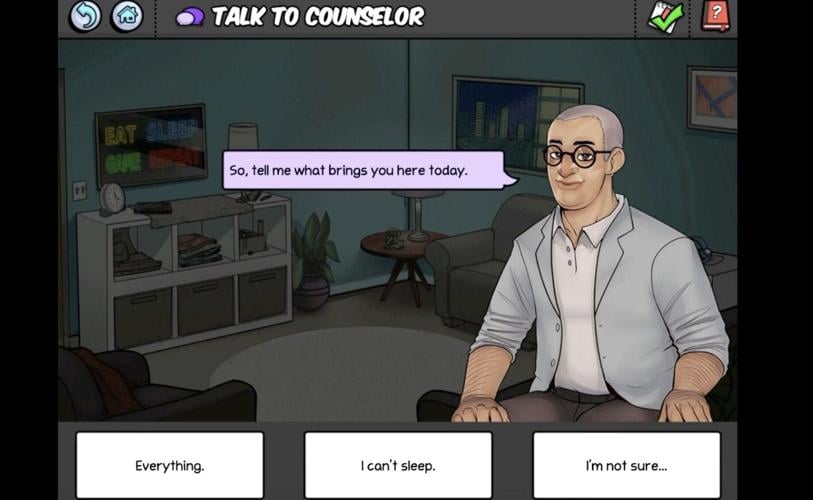
Students playing the game navigate realistic interactive scenarios designed to encourage and normalize making healthy decisions, such as talking to a trusted adult even if their thoughts aren't fully organized. (Lynn Fiellin / Dartmouth via SWNS)
The other 263 students in the trial played commercial role-playing games with no therapeutic content.
One year after the trial, teenagers in the PlaySmart group reported reductions in symptoms of depression that matched or doubled the documented effects of general school-based programs.
They also reported having a more positive attitude toward seeking psychological care after only six weeks of gameplay, according to the findings published in JAMA Network Open.
Study first author Caroline Barry said: "One of the biggest challenges in adolescent mental health is that many young people never receive care because of barriers including stigma, limited access to providers, or just not recognizing they could benefit from help.
"Because behavioral health games like PlaySmart are digital and self-guided, they have tremendous potential to reach adolescents across a wide range of settings who might not otherwise receive care, including communities where access to mental health services is very limited."
She explained that, in the game, players are the main character of a story in which they navigate scenarios based on experiences that the research team gathered from real teenagers when they were first developing the game.

(Photo by Alena Darmel via Pexels)
Behavioral health experts in the lab documented instances of healthy and unhealthy decision-making and identified blind spots in teens' health knowledge.
The game presents students with a series of tasks and choices, such as identifying signs of depression in a friend's room or deciding to turn to a trusted adult for help with a difficult situation.
Better choices lead to more positive outcomes for the player and other characters in the game, while bad choices lead to more negative outcomes.
Players can also work backward through the game to analyze their decision-making, learn recommended approaches to identifying and managing depression, and explore what might have happened had they made different choices.
Students in the study were between the ages of 16 and 19 and recruited from school-based health programs across Connecticut, where study senior author Lynn Fiellin first established her lab when she was a faculty member at Yale University.
They were eligible to participate if they had reported vaping or consuming alcohol, cannabis or non-opioid drugs within the past 30 days, or if they reported heightened symptoms of depression.
Anyone with prior opioid misuse was excluded from the study.

A screenshot from PlaySmart, a video game for teenagers that Dartmouth researchers developed to raise awareness of mental health and substance abuse. (Lynn Fiellin / Dartmouth via SWNS)
Fiellin said: "Serious games for prevention and mental health promotion are a rapidly growing area, but the evidence base is still emerging.
"Few clinical trials in this space combine a randomized design with commercial games as an active control and a 12-month follow-up.
"The rigorous design of our study alone sets a high bar for demonstrating impact."
Teenagers in the PlaySmart group had depression scores that were 1.12 points lower one year later than the scores of students who did not play the game.
The research team says the difference is typical of universal and targeted prevention programs and at the "upper end" of what has been reported in existing studies.
Study data showed no significant differences in PlaySmart's effect based on sex, race, grade level, food insecurity or family history of substance use.

(Photo by Tima Miroshnichenko via Pexels)
Barry said: "The benefit held across all subgroups, which matters for an intervention meant to be delivered schoolwide or in communities broadly."
Fiellin said: "PlaySmart sits right at the top of the range and was achieved with an in-school digital behavioral health game that's fully self-guided by the students and requires no onsite clinician.
"PlaySmart's effect at one year was more than double that benchmark and in a format schools can easily and consistently deliver."
PlaySmart is one of five games developed by Fiellin's group that have been implemented in several school districts and other youth organizations.
The games are provided through her spin-off company, Playbl, which is independent from her lab at Dartmouth.
Fiellin added: "Right now, PlaySmart is deployed to all students as a universal intervention geared toward prevention.
"However, our new findings suggest this game may have a critical role in increasing the access that young people identified as having more significant struggles with depressive symptoms have to an intervention."