
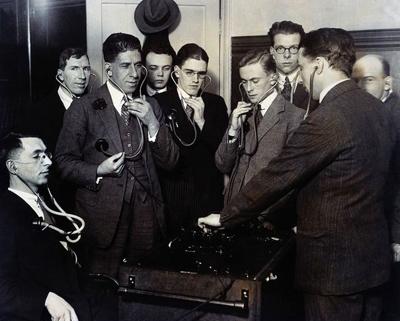
In today’s busy world, people searching for a health care provider have a lot of options, but not too long ago, it was hard to find a doctor, especially in rural areas. Those doctors who did practice in the country often had their healing hands full, trying to serve their patients and communities.
Dr. Jay Kilpatric was one of those doctors. He and his wife, Kathy Kilpatric, a registered nurse, moved to House Springs in the late 1950s.
“I remember when we moved in,” Kathy, 91, of Valley Park said. “There was almost no (doctors) in the north part of the county. There were some at the county seat in Hillsboro and some in the south, but not in the north. We had close to 30 people waiting at the office before we even unpacked,” she said.
Back then, there were no ambulances for emergencies, only volunteers and possibly a hearse from the funeral parlor to take an injured or sick person to the hospital. To make matters worse, St. Joseph Hospital in Kirkwood was the closest, and people had to travel more than 20 miles along Old Hwy. 30, a winding two lane road, to get there.
“It was such a distance to get to the hospital. He (Dr. Kilpatric) had to treat people in the office for things they would never do now,” Kathy said. “We delivered five babies in the office because they weren’t going to make it to the hospital. And he was always running back there. Maybe a little girl fell and had a gash in her head. He’d tell them, I’ll meet you at the office. Today, they’d just tell them to take her to the emergency room.”
Dr. Kilpatric also made house calls, something unheard of now, his wife said
“My brother-in-law was a doctor before Jay, in the 1930s, during the Depression,” she said. “He was in the city and took the bus for house calls. It was a poor time and even doctors didn’t have cars.”
Step even further back in time, 50 to 75 years earlier, and there were no cars, no paved roads and no hospitals anywhere near.
“People were even more separated then,” Kathy said. “They were on their own.”
Treatments for diseases and injuries weren’t as plentiful back then either.
“There were not a lot of things to work with. There were no antibiotics. If someone got pneumonia, you used hot packs and mustard plaster,” she said. “You did what you could with what you had, and a lot of people died.”
In the late 19th century, Dr. Charles Williams was practicing in House Springs, according to the History of Franklin, Jefferson, Washington, Crawford and Gasconade Counties, Goodspeed Publishing, 1888, referenced on the Jefferson County Historical Society’s website. Originally from Licking County, Ohio, Williams came to St. Louis in 1866 and worked as a shipping clerk in the Missouri Pacific Railroad freight depot. He moved to in 1868 to Jefferson County, where he taught school for a while, but then he decided to be a doctor.
“In 1870 he began the study of medicine with Dr. E. J. Thurman, of Fenton, and graduated from the St. Louis Medical College two years later,” according to the history.
About the time he graduated, in March 1872, Williams married a woman named Missouri E. Harbison.
He practiced in Fenton for two years and in Maxville for some time. In 1880, he opened a practice in House Springs. His wife, Missouri, died in 1881, leaving him with two small children. Five years later he married Emma Sue Stephens, according to the history written in 1888.
Doctors from those bygone days were connected to the lives of their patients in ways that most doctors do not experience today, Kathy said.
“He (Dr. Kilpatric) was a part of everything. He was on the bank board, the church board, the school board,” she said. “He got a lot of respect.”
But the number of working hours were “grueling,” she said. “We could hardly set regular hours. They just kept coming in.”
“People were grateful, though. He really cared about people, and they were very appreciative,” Kathy said.
The Kilpatrics eventually moved their practice to Cedar Hill.
Kathy fears that her husband’s endless work cut his life short. He was 63 when he died.
There is very little else written about Dr. Williams in local history. It is recorded, however, that he had a stroke in 1917. A Dr. J.H. Parker, who had a practice in Cedar Hill, took over seeing Williams’ patients, according to the following advertisement placed in the Jefferson County Record, Jan. 11, 1917, and Jan. 18, 1917.
“Everything and everybody has had a raise in prices in the last 20 years except the country physician. People have taken for granted that his prices like the rock of Gibraltar was immovable and unchangeable. H. C. L. (a higher cost of living) at last has caused me to announce the following increase in my rates.
■ Call at office, ordinary prescription. $1.
■ Call at home within one mile, $1.50.
■ Call at house further than one mile, 75 cents per mile one way.
■ Calls at house at night, $1 per mile, one way.
■ Trip to St. Louis with patient, $20.
■ Obstetrical cases, uncomplicated, $15.
All accounts due and payable within 30 days of completion of case and statement will be so rendered.”
Williams apparently lingered, or perhaps recovered, after his stroke. He died nearly five years later and is buried in the cemetery at Cedar Hill Baptist Church, according to information from the Jefferson County Historical Society.