


I was 19 when I was diagnosed with Polycystic Ovary Syndrome (PCOS). Unlike many people with this condition, I’d actually heard of it before diagnosis. Most of the women in my family, including sisters and aunts, had already been diagnosed.
By the time I scheduled a doctor’s appointment to discuss my inconsistent periods, weight that kept piling on no matter my diet or exercise routine, feeling tired all the time despite getting adequate sleep, very high muscle mass and the fun new goatee I’d started sprouting, I knew the writing was on the wall. I had a pretty good guess those four little letters were about to become part of my life, too.
My diagnosis was during my very first OBGYN appointment. After my regular exam, the doctor went over my PCOS symptoms, asked me a few follow-up questions and took an ultrasound of my ovaries.
“Yep, looks like you’ve got PCOS,” she told me.
The doctor told me I was far more likely to develop endometrial (uterine) cancer than my counterparts. When periods are irregular or missed, it means that the uterine lining isn’t shed regularly like it should, which causes the lining to build up, and the overgrowth can eventually turn into cancer, she said.
My best chance of avoiding that fate, she said, was to get on birth control, particularly a birth control like Depo-Provera, the birth control shot, which stops ovulation and thins the uterine lining.
She did not inform me of the possible side effects of the shot, which include weight gain, depression, anxiety, mood swings, headaches, acne and more.
“Okay, well, what can we do about my other symptoms? Like how it’s almost impossible to lose weight, even with regular exercise and closely watching what I eat? Will the Depo shot fix any of that?”
“No. But come back when you’re ready to get pregnant, and we’ll see if there’s anything we can do for you. Most women with PCOS have trouble conceiving so you’ll probably need some help,” she replied.
“But isn’t there anything I can do for my symptoms?” I asked.
“You could try to lose some weight,” she said flippantly as she walked toward the door and said over her shoulder, “We’ll see you next year!”
Wait, so the solution to losing the impossible-to-lose weight was simply to … lose weight? How did that make any sense? Did I hit my head during the exam and misunderstand something?
I discovered online that other women with PCOS (who jokingly call each other “cysters”) were reporting to have received the exact same medical advice, with their doctors telling them the solution for all their PCOS problems was simply to lose weight … but unexplained weight gain and difficulty losing weight is one of the major symptoms of PCOS. To me, the “just lose some weight” advice made about as much sense as telling somebody with a cold to simply stop coughing and the whole virus will disappear.
I tried to follow my doctor’s advice and lose weight. For years, I exercised obsessively. I worked out every single day, often multiple times per day. I only did cardio, like long distance running, because I was scared to build any more muscle mass. Because of my elevated testosterone levels, I put on muscle easier than anyone I knew. One of the trainers at my gym talked me into doing a weightlifting regimen he recommended despite my protestations that it was going to make me look like the Hulk.
“Oh, it’ll just help you tone up, you won’t bulk up.”
Two weeks later, my newly bulging biceps and delts shredded through my favorite beautiful lace shirt.
I watched what I ate, putting everything that passed my lips in a calorie tracking app, including condiments and coffee creamer. I was well below what should have been my recommended caloric intake. But my weight would not move.
After seven years of banging my head against the wall, I decided to bring up my PCOS symptoms with a new doctor that I was scheduled to see at a free clinic, having just been kicked off my parent’s insurance at 26 and living paycheck to paycheck.
The first thing the doctor said when she looked at my chart was, “Wait, how long have you been on the Depo shot? These notes look like you’ve been on it for seven years. That can’t be right.”
“Yeah, that’s right, I’ve been on it since I was 19.”
My new doctor looked very alarmed and explained to me that another thing my first OBGYN failed to mention was that the shot has a “black box” warning for bone mineral density loss. Using the Depo Provera shot for more than two years can cause irreversible bone thinning.
I’d been on it 3 1/2 times that long.
I asked about my PCOS symptoms and asked her if she had any other options for me besides birth control and crossing my fingers. She said she hadn’t worked much with PCOS before but gave me a referral to a doctor she was sure could help.
I waited for months for an appointment with the new doctor, which cost $300 I didn’t have to spare at the time. I sat in the exam room for over an hour waiting for the man who I was hoping would help solve some of my problems.
He finally came into the room and asked for the reason for my visit. I told him about my PCOS symptoms and asked if I had any options to alleviate them. He told me I should try to lose weight, and they would go away on their own.
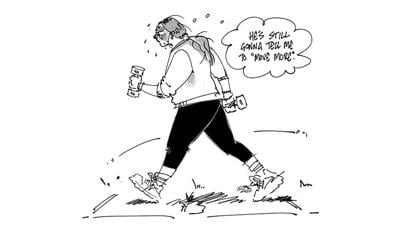
“Just eat less, move more,” he said dismissively, as if that was remotely helpful advice.
He stared at me skeptically as I described in detail the obsessive exercise and diet regimen that I had been on for over half a decade and how the scale just wouldn’t move.
“Some days, I’m working out for over two hours. I eat about 1,200 calories per day. I don’t think I can reasonably eat any less or move much more. I can’t keep this up any longer without seeing results. I think something is seriously wrong with my metabolism.”
He clearly thought I was lying and told me he could recommend a therapist for me to talk to before walking out of the room.
I put the $300 on my credit card, left the office and cried in my car for an hour.
Other women online said they’d been treated the same, told by their doctors that they were either lying or crazy when they reported their diet and exercise routines.
After that appointment, I gave up on the idea of ever being a normal weight. I dropped down to exercising three to five times a week and started eating 1,800 calories a day. I gained 50 pounds quicker than you can say “insulin resistance.” That was 12 years ago. During that time, treatment options for PCOS have remained fairly stagnant.
Recently, PCOS has been renamed to Polyendocrine Metabolic Ovarian Syndrome to reflect the broader impacts on endocrine, metabolic, reproductive and mental health. I hope the new name comes with new research and new treatment options for the estimated 1 in 10 women who have PMOS.
We deserve more help than being told to “eat less, move more” and “come back when you want a baby.”