



Polycystic Ovary Syndrome (PCOS) has recently been renamed to Polyendocrine Metabolic Ovarian Syndrome (PMOS) after years of women saying the old name did not reflect their lived experience.
An estimated 1 in 10 women worldwide live with PMOS, which is a hormonal disorder with a wide range of symptoms including irregular periods, infertility, increased risk of endometrial (uterine) cancer, insulin resistance, weight gain and difficulty losing weight, fatigue, excessive hair growth on the face and body, hair loss on the scalp, mood swings, acne, pelvic pain, sleep issues, inflammation, and even anxiety and depression.
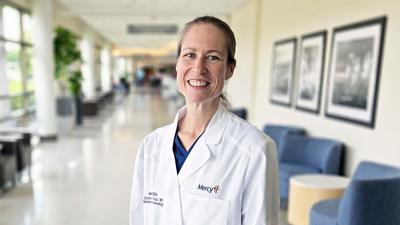
Dr. Catherine Hutz, an obstetrician/gynecologist with Mercy Clinic OB/GYN-Jefferson, said the name Polycystic Ovary Syndrome was a misnomer. Hutz said women develop small follicles, or “baby eggs,” on the ovaries each month. One follicle becomes dominant and continues to grow until it releases the egg during ovulation and leaves behind the corpus luteum cyst, which is a temporary hormone-producing gland, that usually goes away on its own after a few weeks to a few months.
“So, if you do an ultrasound on any woman of reproductive age, I expect to see a cyst on an ovary, that’s normal,” Hutz said.
Hutz said the corpus luteum cysts are different from pathological cysts, which are abnormal fluid-filled sacs caused by abnormal cell growth that do not go away spontaneously and often require medical or surgical management.
“In PMOS, the ovaries don’t have pathologic cysts,” she said. “What they have instead is a bunch of those ‘baby eggs’ or follicles that have not managed to continue to grow up and ovulate, because most of these women are anovulatory. So, you get these little, tiny follicles all the way around the edges of the ovaries, but they’re little. So not only are they not cysts in the cyst sense, but women that get cysts think that they have PMOS because they have cysts on their ovaries.
“It was a complete misnomer the whole time.”
Different name, same condition, more help
Hutz said the name has changed, but diagnostic criteria have not. Doctors will still use the “Rotterdam criteria” which require at least two of the three symptoms: ovulatory dysfunction (irregular, infrequent or absent menstrual periods); hyperandrogenism (high levels of male hormones, which can present as excessive body hair, severe acne, male-pattern baldness or elevated testosterone levels); or polycystic ovaries (the tiny follicles on the edges of the ovaries).
Experts say the term “polycystic ovary syndrome” has often led to misunderstanding, delayed diagnosis and the reduction of a complex hormonal and metabolic condition to just “ovarian cysts.”
The new name Polyendocrine Metabolic Ovarian Syndrome is intended to reflect the condition’s impact on the endocrine, metabolic and reproductive systems. The hope is that the change in terminology could lead to better diagnosis, treatment and care.
Hutz said she believes the change may prompt doctors outside of gynecology to take a whole-body approach to care for women with PMOS instead of considering it a gynecological issue only affecting the ovaries. She hopes it will encourage a collaborative approach to treatment, including cardiologists, primary care doctors, gastroenterologists and pulmonologists.
“Women who have PMOS are at significant increased risk for diabetes, high blood pressure, high cholesterol, obstructive sleep apnea, liver disease, cardiovascular disease, depression and anxiety, obesity and eating disorders. None of these we would say are gynecologic,” Hutz said.
Many women say the focus on fertility also ignores their daily struggle with the myriads of other symptoms they face.
“When they changed the name to Polyendocrine Metabolic Ovarian Syndrome, I feel like this encompasses a lot more of the concerns that I have for women who have this condition,” Hutz said. “I have to think about from the lifespan of what about your risk for diabetes, what about managing your obesity, your high insulin levels. These are all also important concerns, and I hope that by getting the name changed, not only do patients hopefully move away from thinking, ‘Oh, this means I had a cyst on my ovary’ to more about thinking about what this means for them as a person trying to achieve the greatest health that they can in their lives.”
Better treatment
Often, women with PMOS have complained that their chronic symptoms have been made secondary below a focus on reproductive capacity, whether they are trying to get pregnant or not. Hutz said women can also feel a stigma or shame around infertility.
“This focus on ‘PMOS equals infertility’ can be difficult for women. I hope that by extending the definition, they’ll realize it’s more than just about the reproductive system and will help everybody kind of come together and get women the best care that they can get.”
Hutz said she hopes the changes will lead to new treatment options for PMOS, such as weight loss medications. Because women with PMOS often have insulin resistance, losing weight can be extremely difficult, even with changes in diet and exercise.
“When we tell women with PMOS that you need to eat less and exercise more, we’re asking them to do something that’s really hard and that their physiology is fighting against even more so than people who don’t have this diagnosis. GLP-1s could really, really help them, because it makes them more sensitive to insulin. So, they aren’t still fighting high levels of insulin that make it, I don’t want to say impossible to lose weight, because that’s not fair to women, but make it so much harder than it might be for other people.”
Hutz said many weight-loss medications are only approved by insurance once a condition such as type 2 diabetes, obstructive sleep apnea or extra fat in the liver is diagnosed. Hutz said those conditions may be avoided altogether if weight loss is addressed before it gets to that point.
“We don’t tell people with hypertension that you have to have kidney disease before we’ll treat your hypertension,” she said. “We’re trying to prevent that. If you have high blood pressure but your kidneys are still okay, we don’t tell you to wait until your kidneys are dying before we can put you on an ACE inhibitor.”
Hutz encourages women to advocate for whole-body care, and if necessary, find a new doctor.
“Women have a right to great healthcare, and it may involve more than just a gynecologist. If you’re not getting the care that you think you need, then always be happy to ask your physician or speak to another one,” Hutz said. “We have a right to empathetic health care that takes our needs into consideration, and hopefully when you come to see your doctor, you’re getting that. You have a right to ask questions.”