

On a warm April evening a little more than two years ago, I returned from work and decided to unwind with a glass of wine on my porch. I opened Facebook on my phone to find it flooded with posts about one of my favorite friends from college, Samantha. I couldn’t make sense of what I was seeing. She was tagged again and again in a local news article stating the victims of a double murder in the area had been identified.
I simply could not process it. Sam didn’t even live near St. Louis; she’d lived in California for years. I thought the victim had to be someone with the same name. Somebody had to have made a horrible mistake. Something like that simply couldn’t have happened to someone like Sam.
I met Sam in college, where we were both majoring in art. I spent hours with her in the ceramics studio where we laughed and joked late into the evening. She was a joy to be around. She was optimistic, genuine, caring, spontaneous and had a kind word for everyone.
She was a true artist and created unique and strange (and sometimes creepy) works of art depicting half-human, half-animal creatures. Her part of the art studio was filled with long-necked, sad rabbits and birds with human faces. While everyone else signed their work initials, she signed hers with an exclamation mark.
Sam had this remarkable way of making people feel like they were important to her. After her death, I was amazed at how many people said she had been one of their closest friends.
She was an animal lover who was terrified of squirrels. For work, she taught children how to garden and create art. She had a husband and two stepchildren she loved. She was only 34.
Sam had flown from Los Angeles to St. Louis to help her younger sister, Sara, move out of a home she shared with David, a boyfriend she was breaking up with. Sam was worried about Sara’s well-being and wanted to be there to keep her safe.
I never met Sara, but I heard her friends and family describe her as a warm, sweet, humble, beautiful woman who brought love and light to those around her, just like Sam.
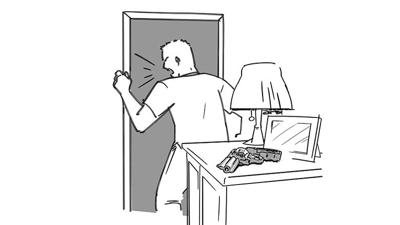
Police believe David murdered the sisters after they arrived at the home with a moving truck. He also reportedly shot Sara’s dog and then fled the home before he was fatally shot by a state trooper after a car chase.
Neighbors said they were shocked David was capable of the crime because he had been a good neighbor who readily helped others.
You never know what’s going on inside someone else’s home, and nobody who’s alive knows exactly what happened that day. And I wouldn’t try to guess what happened in the home in the days and months before that. But I do know Sam flew 2,000 miles to help her sister move because she was worried about her safety.
Court records showed David had two previous orders of protection against him that had been dismissed. According to the Missouri Courts website, an order of protection is issued by a Missouri court pursuant to the Domestic Violence Act designed to restrain a person from abusing, stalking, sexually assaulting or harassing another person. Unlike a restraining order, an order of protection carries criminal penalties for violation.
Homicide is the leading cause of death in the U.S. among Black women aged 15-45. It’s also the leading cause of death among pregnant women and the seventh leading cause of premature death among women overall. American women are killed by intimate partners more than any other type of perpetrator.
Abused women are five times more likely to die if their abuser has access to a firearm. If their partner has threatened them with a gun, the risk of death is 20 times higher. Research shows that the most dangerous time for someone experiencing domestic violence is when the victim leaves a violent relationship or expresses intent to leave.
Domestic violence is also the canary in the coal mine.
According to a recent study, more than two-thirds of those who commit mass shootings (defined in the study as an incident with four or more fatalities by gunfire, not including the perpetrator) have a history of domestic violence.
The kind of man who gives his kids black eyes is the same kind of man who will pull a gun in a road-rage incident. The kind of man who leaves bruises on his wife is the same kind of man who will show up to her place of work and shoot her and her coworkers dead when she tries to divorce him.
For example, the man who killed 49 people at Pulse nightclub in Orlando frequently beat his ex-wife. The man who killed 26 people at a church in Sutherland Springs, Texas, physically attacked his then-wife and infant daughter. The man who killed 17 people at Marjory Stoneman Douglas High School had a history of violence toward his mother. The list goes on and on.
A history of past violence, especially domestic violence, is the best predictor of future violence.
Whether you’re somebody who believes fewer guns make us safer or someone with the opinion that “the only thing that can stop a bad guy with a gun is a good guy with a gun,” surely most of us can agree that someone who beats their intimate partner or children is a “bad guy.”
A 1994 federal law bars possession of firearms and ammunition by people who have been convicted in any court of a “misdemeanor crime of domestic violence” or is subject to domestic violence protective orders. But often that law is not enforced at the state and local level.
Keeping firearms away from abusers should be a no-brainer, but it is also made difficult by loopholes allowing people to arrange gun sales online, at gun shows and from private sellers without a background check.
Red flag laws that allow police and family members to petition a judge to temporarily remove firearms from potentially dangerous people also could be a big step in the right direction. Many states have red flag laws in place, but not Missouri. In fact, our legislators have tried to pass “anti-red flag” laws. According to the Center for Disease Control, Missouri ranks fifth in the nation for firearm mortality rate.
Given his history, David should not have had access to a firearm.
If domestic violence were taken more seriously, Sam, Sara and many other victims would be alive today. We know how to stop a lot of these “bad guys with a gun,” but are we willing to take away their guns to prevent a violent future?
The names in this story have been changed to protect the family.
October is Domestic Violence Awareness month. If you or anyone you know needs resources or support, you can contact:
National Domestic Violence Hotline at 800-799-7233
National Sexual Assault Hotline at 800-656-4673
A Safe Place at 636-232-2301