



Score a victory for practicality over passion in the Jefferson County Flood Debate of 2022.
At its Jan. 24 meeting, the County Council voted 4-3 to amend two sections of the county floodplain management statute (less popularly known as Chapter 405 of the county’s codes).
The change will again allow new construction to cause up to a 1-foot increase in flooding.
The standard was narrowed from 1 foot to 1 inch in July 2019.
Councilwoman Renee Reuter (District 2, Imperial) drove the 2019 action after seeing the human toll of Meramec River flooding in her district, which includes unincorporated areas of Fenton, Arnold and Imperial.
She and the council majority at the time were supported by flood-weary county residents, led by Susan Liley and Paula Arbuthnot, directors of the De Soto-based Citizens for Flood Relief.
These folks constitute the Passion Lobby. Reuter, in an interview after the Jan. 24 meeting, deemed the curtailment of the flood standard her “most important” legislation in 12 years on the council.
Liley and Arbuthnot are sincere, highly informed, articulate, energized advocates for flood relief. They’ve devoted most of their time and energy to De Soto’s flood problems, among the most severe in the county.
I ran into Paula at the Festus UPS store in mid-January and she was emphatic in supporting the 1-inch standard.
Susan, whom I’ve interviewed numerous times while covering De Soto city government, wrote a letter to the editor we published on Jan. 6, saying she had “proof that changing our flood regulations in Jefferson County is a terrible idea.”
The council held a public hearing on the bill on Dec. 13, but Liley wanted another one.
“Without the second hearing we are lost,” she wrote.
I watched the archived video of the Dec. 13 hearing on the county website, and to my ears, the speakers in favor of going back to 1 foot made the stronger case.
First came residents of the River Hills subdivision in Festus, whose only access is VFW Drive and its flood-prone bridge over Plattin Creek.
They need a new bridge, and the 1-inch flood standard would make that project unaffordable.
“Our children should not have to take a boat to get to their bus stops,” resident Jim Swyers said. Johnathan Vilbert described how he and his wife had to ferry their newborn child over swollen Plattin Creek.
“Do they make personal flotation devices for 2-week olds?” Vilbert asked. “They don’t.”
Veteran civil engineer Gene Fribis of Arnold pointed out that all other Missouri counties use the 1-foot standard.
Under the 1-inch requirement, bridges “are all going to be more expensive because they’re going to have to be longer, to span across the entire (waterway),” he said. “The additional length actually increases the cost of the bridge by more than twice.”
County Public Works Director Jason Jonas said forcing all bridge projects to meet the 1-inch rule could expose the county to substantial legal liability from developers.
Jonas said the 1-inch requirement also would make it difficult to obtain grants for projects like elevating Seckman Road, a key east-west traffic artery subject to flooding.
He said he applied for a grant before the 1-inch rule took effect to pay for raising the road by 2 1/2 feet.
“I don’t know how to show a no-rise (in flooding tied to the elevation). I have been wrangling with, ‘Do I cancel that grant?’ I’m not going to cancel it. That flooding is unacceptable to the county.”
It’s the same story, he said, with flooding on I-55 and highways 21 and 141.
Under the 1-inch requirement, “MoDOT (Missouri Department of Transportation) can’t touch them (to mitigate flooding),” Jonas said.
Discussion at the Jan. 24 County Council meeting presented another reason to go back to 1 foot. The 1-inch rule doesn’t match state and federal flood maps used to administer the National Flood Insurance Program. Those maps have applied the 1-foot standard, as prescribed under the state and federal model flood-management laws, for decades.
“We would have to develop all new maps,” said Councilwoman Tracey Perry (District 5, Festus). “Who knows what it would cost? We wanted to make this (2019) ordinance work, we wanted to help with flooding. But as it stands right now, we put ourselves in a pickle.
“We really made a bad judgment call on this because we didn’t have all the facts (in 2019).”
As for private development, the county Planning Commission vets all building and land-use projects and evaluates the flood propensity case-by-case. Then it makes recommendations, up or down, to the County Council. We need to trust the commission to do its job.
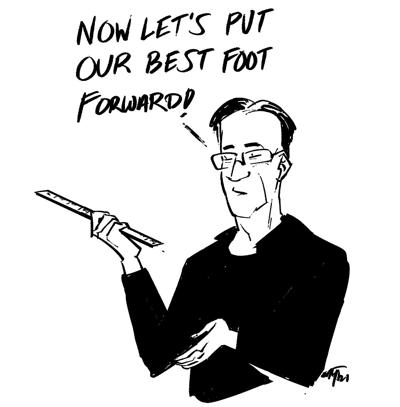
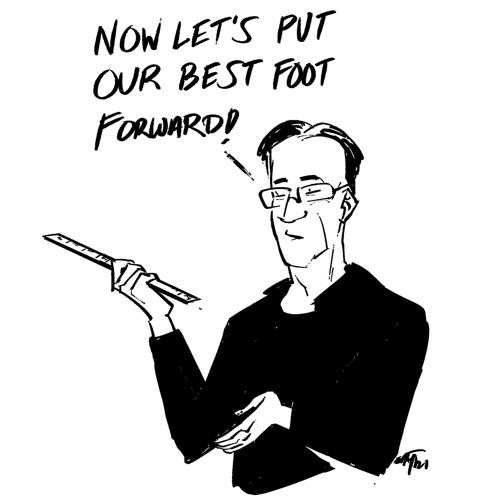
Practicality won. You can use the whole ruler again.
Now let’s all get passionate about finding practical solutions to our flooding problems. More help may be coming from the state.
Gov. Mike Parson has proposed creating a state flood relief office for proactive flood response, using more accurate mapping and real-time measurement of stream levels.
Sounds like a good idea to me.