


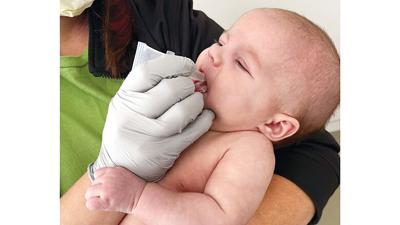

Vaccination is considered by many to be one of the greatest achievements of public health, preventing tens of thousands of deaths and millions of cases of disease.
For generations, the value and safety of vaccinations were never questioned.
But in recent years, growing vaccine hesitancy has threatened to undermine the progress society has made against some of its most insidious diseases, health professionals say.
Recently more and more people have been exposed to medical misinformation and disinformation, especially through social media platforms, health professionals say. This has led to many parents feeling hesitant about or altogether rejecting vaccinations for their children against vaccine-preventable diseases.
According to the World Health Organization (WHO), vaccine hesitancy is the delay or refusal of safe vaccines despite the availability of vaccination services, which can be caused by a mix of trust issues, misinformation and risk complacency. An estimated 1.5 million children globally die each year of diseases that could be prevented by vaccines that already exist.
Vaccination programs have protected children from hospitalization, disability and death for various infectious diseases, such as measles, poliomyelitis and pertussis, health professionals say. It can even protect children from some forms of cancer. Vaccination programs led to the worldwide eradication of smallpox in 1980, after plaguing humans for thousands of years and killing hundreds of millions of people.
WHO reported on a study that global immunization efforts have saved at least 154 million lives during the past 50 years. The vast majority of lives saved, 101 million, were infants. The measles vaccination has had the most significant impact on reducing infant mortality, accounting for about 60 percent of the lives saved due to immunization.
The study showed that vaccination against 14 diseases including diphtheria, Haemophilus influenzae type B, hepatitis B, Japanese encephalitis, measles, meningitis A, pertussis, invasive pneumococcal disease, polio, rotavirus, rubella, tetanus, tuberculosis and yellow fever have directly contributed to reducing infant deaths by about 40 percent globally.
But the success of vaccination programs relies on high rates of participation, and dropping vaccination levels can leave communities vulnerable to outbreaks, health professionals say.
Vaccine hesitancy
Dr. Diana Roukoz and Crystal Lucas, CNP, who both provide pediatric care at Mercy facilities, have noticed a large uptick in patients expressing vaccine hesitancy in recent years.
“Every day, unfortunately, and it’s exhausting and exasperating,” Roukoz said.
She said she tries to listen to patients to understand where their hesitancy comes from so she can address any of their concerns and provide them with accurate facts and data. With many patients, she said, hearing medically accurate information is enough to assuage their fears. She said other patients have gone very far down conspiracy rabbit holes and come into appointments combative and ready to argue rather than to learn.
Lucas said she wishes more vaccine-hesitant parents would come into the office with an open mind, willing to learn medically accurate facts.
Roukoz said vaccination has become a victim of its own success. Because vaccinations have been so effective, most people have had very little first-hand experience with vaccine-preventable diseases. Without seeing the risks of the diseases, many of those averse to vaccinations only consider the alleged risk of a vaccination rather than the risk of the disease itself.
“I often say we’ve done too good of a job making these diseases a distant memory. I think that people should talk to their grandparents, and they will tell them,” Roukoz said.
She said she wants her patients to understand the real risks of not vaccinating, but she doesn’t just want to scare them into compliance. “While there is some fear of the diseases, I don’t want it to be all about fearmongering. I want them to know why we do this and how long we’ve been doing it for. So that’s kind of how I approach those things, and every once in a while we get a quote unquote win.”
Lucas said she often sees vaccine hesitancy in patients who don’t understand the serious effects of many vaccine preventable diseases.
“I had a mom ask me today if I thought that measles could truly hurt her child if they got it, and I was like, absolutely. We have to go back to what measles actually is, and it’s a viral infection that attacks your body, and it can cause encephalopathy. It can cause long-term problems, the erasing of some of your immune cells for up to two years. For many, many years after getting measles, you can die from something called subacute sclerosing panencephalitis. It’s been publicized here recently as not a big deal. I feel like the risks are being downplayed a lot.”
Measles can cause pneumonia, encephalitis, blindness, hospitalization and even death. Transmission is extremely high in measles, infecting 9 out of 10 unvaccinated people who come into close contact with it. The virus can hang in the air for up to two hours after someone coughs or sneezes. Two doses of the MMR vaccine give 97 percent lifetime protection, she said.
Lucas said she has noticed a distinct lack of vaccine hesitancy in patients who have seen vaccine preventable diseases firsthand.
“Some of these diseases still are rampant in other countries, in other places around the world. I don’t have the hesitancy with my Hispanic population because they still see it in Mexico all the time,” Lucas said.
High vaccination rates, Lucas said, help maintain herd immunity, which protects children and adults who cannot be vaccinated or who have weakened immune systems.
“There are some kids in our clinic who can’t get immunizations because of cancer or other treatments, or that have autoimmune diseases. We have to cover those kids as well. So, by somebody not vaccinating, they’re potentially harming those kids.”
Lucas said parents should follow the AAP vaccination schedule, despite political and activist rhetoric. For parents looking to have their children in public school, Lucas notes that the Missouri school districts are following the AAP recommendations and have not made any changes.
Newborn vaccinations
Lucas said two newborn shots are particularly important to protect young children: hepatitis B and vitamin K.
Lucas said many people are hesitant to give their newborn a vaccination against hepatitis B, a highly contagious virus that affects the liver, due to its association with sexual activity. However, that association is not accurate.
“When I’m talking to families about hepatitis B, especially if they’re hesitant because they think it’s a sexually transmitted disease, I actually have to be very forward with them, tell them it is a bodily fluid transmission. It’s not necessarily just by semen or vaginal fluid. You can get it through blood,” Lucas said.
The hepatitis B virus lives on surfaces for about seven days, Lucas said, even longer in certain conditions. While mothers are typically screened for hepatitis B during pregnancy, exposure can occur through other loved ones, daycare workers, neighbors and even strangers. Only half of infants and children who get hepatitis contract it from their mother, while the rest comes from community exposure.
Lucas said even a microscopic amount of blood, such as from a hangnail or paper cut, can be enough to pass the hepatitis B virus. With babies often putting anything within reach into their mouths, this can pose a large risk, especially for babies in public settings such as parks, daycares, churches and nurseries. Exposure can also come through biting, sharing pacifiers or touching an infected person who has scrapes or cuts.
“If you contract hepatitis B under the age of 5, you do have a long-term risk of severe liver damage and the potential of a liver transplant goes up if you contract it at a younger age,” Lucas said.
Ninety percent of babies or children who contract hepatitis B will develop a chronic infection and 25 percent of those will die from the disease.
The hepatitis B vaccine has been around for more than 50 years and has been recommended universally at birth since 1991. It poses a rare risk of an allergic reaction, which is estimated to be one in 1.1 million.
Lucas said some parents opt to not have their children take the human papillomavirus (HPV) vaccination, which is typically given to girls and boys at ages 11 or 12, because of the same sex-related stigma. Lucas said the HPV vaccination is intentionally given early before sexual activity begins to provide maximum protection.
“We’re just trying to protect them before they’re ever exposed,” Lucas said.
Nearly 80 percent of men and women contract HPV during their lifetime. In some cases, HPV can cause long-term infections that can lead to cancers of the cervix, throat, anus, penis, vagina and vulva. However, those who have received the HPV vaccination have had drastically lower instances of cancer than those who were unvaccinated.
Vitamin K
Lucas said a growing number of parents are becoming hesitant about the vitamin K injection given to newborns, but she said this shot is extremely important because all babies are born vitamin K-deficient.
Unlike other vitamins, vitamin K doesn’t cross the placenta wall.
Lucas said vitamin K helps the blood to clot effectively and is absorbed through bacteria in the gut and in food. Babies are born with almost no bacteria in their gut and are unable to absorb enough of their own vitamin K until they are around 6 months old. Until then, babies are at a much higher risk of life-threatening bleeding and death.
Without a vitamin K shot, babies are much more likely to experience spontaneous internal bleeding, especially in the brain or intestines, which causes death in one in four infants. Of those who survive, many are left with lifelong disabilities. Lucas said the signs of spontaneous bleeding are very subtle, if not entirely invisible, and most parents do not recognize it until it’s too late.
Risks of a vitamin K injection include soreness, irritation or bruising at the site of injection and infection. It has been given to almost every single baby in the United States since 1960.
Roukoz said while there is an oral version of vitamin K, it is much less effective and depends on adherence to a strict regimen of multiple doses over several months.
“That is far less effective. Very, very much less effective. Remember, you’re relying on the gut that is immature to do something that it’s not cued up to do.”
Alternatively, the shot is performed at birth and does not have to be administered again. But, Roukoz said the oral version is better than nothing and should be given if the parent will not accept the shot.
MMR vaccines
Lucas said some have advocated for separating out the measles, mumps and rubella (MMR) vaccine into three different single-disease shots administered at separate appointments, but this is a bad idea for multiple reasons, one of which is that the shots are not even currently available as single-disease shots.
“I did have a mom ask me, ‘Are you guys going to be able to get that?’ I was like, ‘No, ma’am, that’s going to take years and years to actually produce something that does that. It does not exist,” Lucas said.
She said some vaccine-hesitant patients cite the usage of metals, such as mercury or aluminum, as preservatives in vaccines as a concern. Lucas said babies actually ingest more of these metals through breast milk and food than through vaccination. Because vaccines are injected into muscle, she said, it has a slow absorption rate, which allows the body to filter out the metals and discharge them through urination.
In fact, Lucas said, by separating the MMR vaccination into three shots, it actually increases the amount of the preservatives injected because each individual shot has its own preservatives.
Lucas said the MMR vaccine has been safely used as a combination shot for more than 50 years, and there is no evidence that separating the vaccines would be safer or more effective. In fact, Lucas said, splitting up the shots would be less effective.
“If we talk about how the immune system works, it works better when we give these things together. We’re talking about live vaccines at that point in time, and with the way you would have to space them out, I couldn’t give you one today and then bring you back in in three or four days and give you another. On top of that, I’m increasing the preservative count in each of those, the number of pokes in each of those.”
Roukoz agreed that vaccines save time and money for parents.
“An ounce of prevention is worth a pound of cure,” Roukoz said. “Vaccines are safe, effective, and we’re here to listen and answer your questions.”
Both Lucas and Roukoz said it’s a matter of trust. If parents trust their pediatrician to care for their child, they should trust their doctor with basic scientific knowledge on vaccinations.
“I would never offer a vaccine to you that I wouldn’t give to my own kid, like 100 percent,” Lucas said.
“The majority of pediatricians, pediatric nurses and nurse practitioners, we all vaccinate our kids,” Roukoz agreed. “I joke that my kids are vaxxed to the max.”