

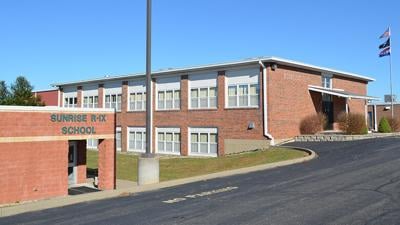
The Sunrise R-9 School District will ask voters on April 8 to approve the transfer of 40 cents per $100 assessed valuation from the debt service levy to the operating levy.
“In school funding, you have four different funds, or places you put your money; you have your general fund where folks’ tax money goes (to cover general operating costs), and then you have what’s called debt service, where another portion of folks’ money goes to pay off bonds and stuff like that from building projects at school,” said Armand Spurgin, superintendent of the kindergarten through eighth-grade school district. “What this initiative says is we’re going to move part of the money that (currently) goes to debt service over to the operating, so it’s not a tax increase; it’s just putting the money in a different place.”
While the measure, called Proposition Kids, does not require a tax increase, the transfer to the operating tax levy will make the tax a permanent one, rather than one that would expire after the debt is paid off.
The ballot issue requires a simple majority vote for approval.
The district’s overall tax levy is $4.6724 per $100 assessed valuation. If voters approve the transfer, it will reduce the debt service levy by 40 cents and increase the operating tax levy by 40 cents. The operating tax levy would increase from $3.5241 to $3.9241, and the debt service levy would decrease from $1.1483 to $0.7483.
Spurgin said just like households, school districts are seeing inflation, and the district has to figure out how to cover those expenses.
“So as the money comes over to (the operating fund), we have a little bit more ease on how we can spend it,” he said.
A big part of the operating funds will be used to pay tuition for Sunrise students to move on to high school, he said.
“We are a K-8 (school district), so we send our kids to other high schools and have to pay (the other school districts) for them to go there,” Spurgin said. “And over the last couple of years, that cost alone has risen over $300,000.”
Also the increased funds in the operating levy “is going to be spent on rising food costs for the food service program, health benefits and salaries for our teachers, with the new state requirements that are coming down,” he said.
In May, former Gov. Mike Parson signed Senate Bill 727, a 167-page omnibus education bill that calls for the minimum salary for a teacher with a bachelor’s degree to increase from $38,000 to $40,000 for the 2025-2026 school year. Teachers with a master’s degree will see their minimum salaries raised to $46,000.
Along with implementing the new minimum salary, the bill requires school districts to provide a pay raise up to 3 percent every year after the 2025-2026 school year based on the Consumer Price Index for All Urban Consumers of the U.S. as reported by the Bureau of Labor Statistics.
Sunrise’s minimum salary last school year was $38,000.
The increase to the minimum teacher salary created a big expense for the district, Spurgin said.
“We spent like another $400,000 last year to start meeting salary guidelines, which I get,” he said. “(Teachers have) got to make enough money to live. It’s just a lot on a small school district.”
Tuition costs for Sunrise students to go on to area high schools also have risen and will continue to, he said.
Spurgin believes that cost will go up another couple of hundred thousand dollars “because it costs more to educate kids so the high schools are charging us more.”
“So that’s kind of the biggest thing for us – that tuition cost, but then also to be able to provide our staff with good health care benefits and cost of living raises, just that never-ending cycle of expenses,” he said.
Spurgin said if the levy transfer isn’t approved, eventually the district may have to look at downsizing staff and cutting programs.
The Sunrise Board of Education voted in January to put the issue on the April ballot.