













Eight years ago, Mike Burns heard three dreaded words from his doctor: you have cancer. He had more questions than answers.
Am I going to see springtime?
Am I going to get to see grandkids who have not yet been born?
Am I going to get to see Christmas?
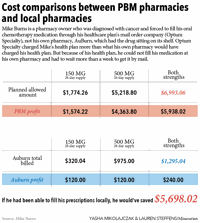
As part of his treatment plan, Burns was prescribed capecitabine, an oral chemotherapy drug. Battling cancer would be a challenge, but at least getting his medication wouldn’t be: Burns owns a chain of pharmacies, and capecitabine is on the shelf at his hometown store in Garnett, Kansas.
But when he went to fill his own prescription, it was rejected.

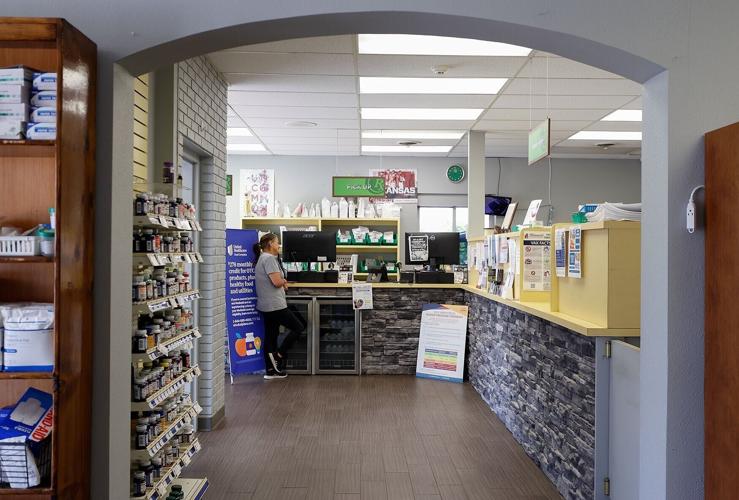
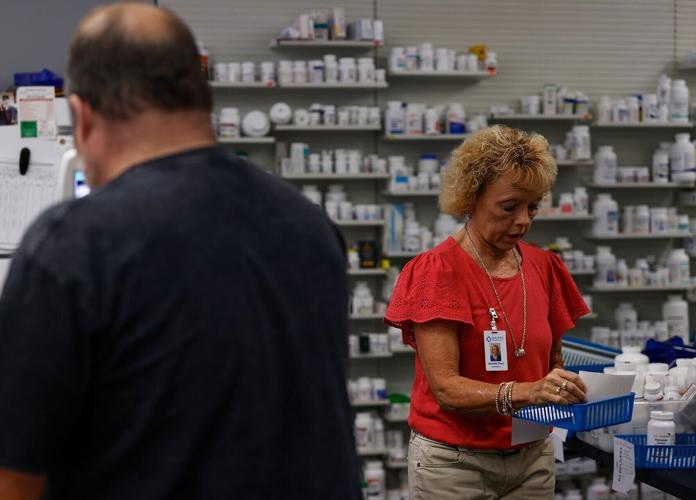
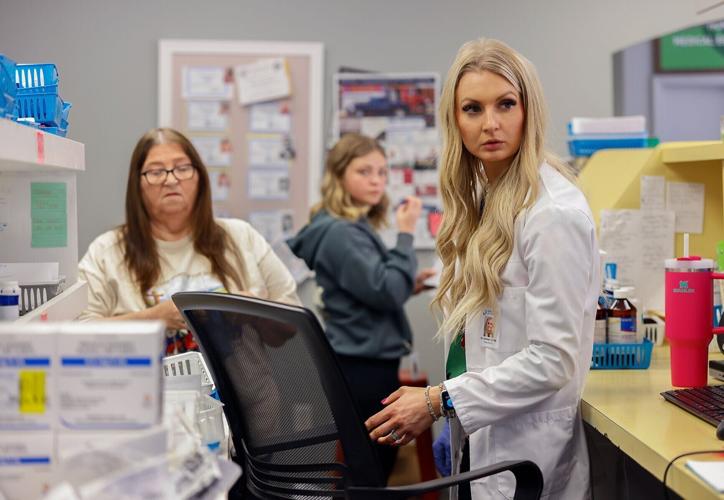
Pharmacist Katelyn White works behind the counter on April 23 at Malden Pharmacy in Malden, Mo. The shortage of pharmacy technicians and pharmacists has caused a major impact on patient care across community pharmacies, with the biggest effects being seen in medication safety, wait times, patient counseling and staff burnout, White said. “Rural communities like ours with limited pharmacy access are particularly struggling with all this making it hard to expand critical services due to workforce shortages,” White said. “Overall pharmacy workforce shortages are shifting pharmacies from proactive patient-centered care toward ‘survival mode’ operations focused mainly on keeping up with prescription volume.”
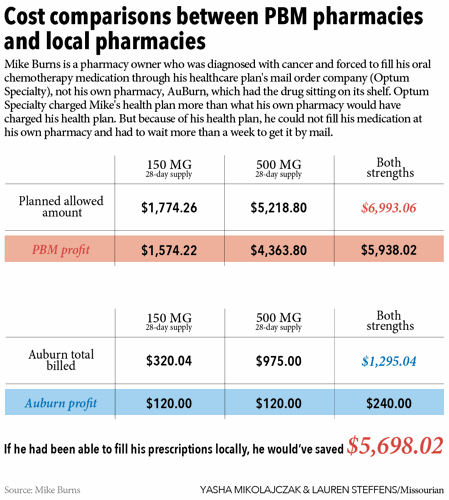
The cancer drug Burns tried to fill was considered “specialty” by the company that AuBurn Pharmacy used to manage prescriptions for its own employees. Even though he could touch the bottle in his own store, he had to obtain his prescription by mail order.
It took over a week to arrive on his doorstep.
“It’s no different than when you give someone your credit card and it comes back declined. Do you know the feeling that you have?” Burns said. “... Imagine that’s your healthcare and it’s your life depending on it.”

Malden resident Karin Moore waits to pick up her prescription on April 23 at Malden Pharmacy in Malden, Mo. The pharmacy serves patients from several surrounding communities including Clarkton, Campbell and Gideon. In Missouri, more than 55,000 residents have at least a 30-minute roundtrip drive to reach a pharmacy.
The specialty mail order pharmacy Burns had to use was designed for patients who need complex therapies and more personal care. But for the nine months he took capecitabine, Burns said he received no calls checking in on his treatment.
As a patient, Burns didn’t have to pay for the drug when it was sent by mail. But as the business owner and a pharmacist, he saw his company’s health plan being charged more than he knew the drug should cost. Filling his prescriptions locally would have saved his own health plan over $5,000.
“They force (patients) to go to specialty where then they jack the price up, they inflate it, and they keep the difference” Burns said. “... That is what happens every day.”
Long drive times, limited access
For many Americans, a crucial part of their healthcare service no longer goes through a local pharmacist or a doctor. There is a hidden level of control that can dictate what medication you can have, where you get it, when you get it, and how much you pay for it.
That’s the pharmacy benefit manager. These corporations were created to look out for patients, serving as a mediator of sorts between insurance companies and pharmacies.
For decades, employers used these pharmacy benefit managers to verify drug benefits and process prescription claims with the intent to drive down healthcare plan costs for the patients they insure.
But as time has passed, the relationship between pharmacies, benefit managers and insurance companies has changed. Now some PBMs are owned by big healthcare companies. The largest three benefit managers control nearly 80% of the prescription drug claims in the United States, according to the Federal Trade Commission.

Technician Michelle Cloud and certified technician Chris Clubbs fill patient prescriptions on April 23 at Malden Pharmacy in Malden, Mo. The pharmacy has served approximately 2,500 patients in the last year, owner Phil Wilkins said.
Pharmacy benefit managers contract with employers, insurance companies and government programs across the nation to create drug plans for patients, but critics say the savings skew toward the PBM, not the patient, the pharmacy or the employer.
“People don’t understand how the price they pay or their access to a pharmacy is actually determined by this murky hidden thing in the background,” said Abe Funk, a pharmacy owner based in Southeast Missouri. “... As people begin to see that a little bit, they’re like, ‘Wait, wait, why are they making billions of dollars, and I’m paying all this for my drugs?’”
As PBMs have evolved, so has the world around them: independent pharmacies were more than twice as likely to close than chain stores from 2010 to 2021. Drug prices rose three times faster than inflation in the 2010s.
And in Missouri, more than 55,000 residents have at least a 30-minute roundtrip drive to reach a pharmacy.
This summer alone, at least two more independent pharmacies closed in Missouri. One had been serving customers for 185 years.
But even with a pharmacy in town, patients are often steered to the pharmacy their PBM controls, not the pharmacy of their choice.
“If you got two pharmacies in town and the PBM owns one of them, who do you think is going to get the more fair deal?” said state Rep. John Hewkin, a Republican from Cuba and former pharmacist working on PBM regulation in Missouri.
To save money, health plans may favor pharmacies like Walgreens that have large networks, or pharmacies like CVS that are directly owned by a pharmacy benefit manager. This means that Missourians in small towns without chain pharmacies can face longer drives to get their medication.
Once Burns’ cancer abated, he ended his company’s contract with its PBM, Optum Rx, which is owned by United Healthcare, a major insurance company.
AuBurn now uses a “transparent PBM,” MaxCare, which doesn’t have an ownership structure in which an insurer controls the benefit manager.
“The reality is when we get PBM reform … we can maintain access to your local pharmacy, which is your most successful healthcare provider and the lowest cost. Because if we go away, who’s left? The PBMs,” Burns said.

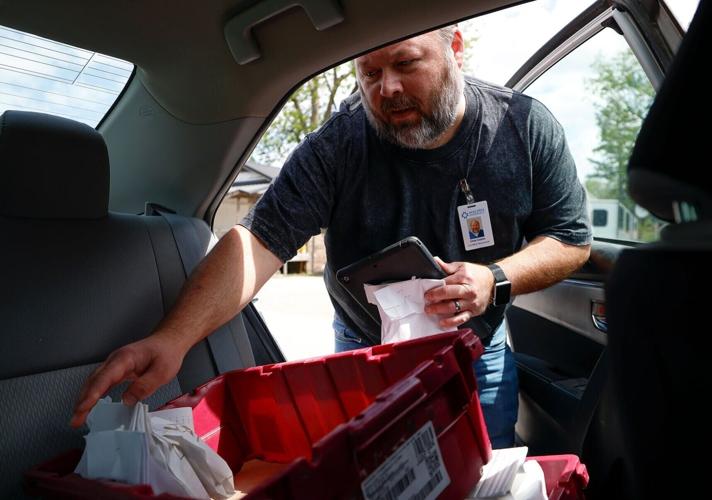
Chris Clubbs unloads prescriptions to make a delivery on April 23 in Clarkton, Mo. Clubbs started his first pharmacy job as a delivery driver on July 10, 1995, for Overturf Pharmacy, which formerly occupied the same building as the current Malden Pharmacy.
In May, Optum Rx announced a change to its pricing structure. Under the new model, the PBM’s clients — which include employers, insurance companies and government programs — will have transparency into Optum Rx fees, and the company will disclose payments it receives from drug manufacturers, per a company news release.
“It’s not nearly enough to cover our costs. And they know that,” Burns said. “... It sounds good, but if you really read into the contract, that’s not what they’re going to do. The overall reimbursement is still far below what the average pharmacy needs to be sustainable.”
No choice
Greg Alexander’s life was at the mercy of a rocket-propelled grenade. It hit his tanker in Iraq, the blast melting into the left side of his body. He lived, but his health is still not fully under his control 13 years after his honorable discharge from the military.
Alexander uses Tricare, the health and pharmacy plan for current and former military personnel. Tricare uses Express Scripts to manage pharmacy benefits for patients.
Alexander lives with his family in Camdenton. The Ozark town boasts five pharmacies, but Alexander can only go to one chain pharmacy under his Tricare plan.

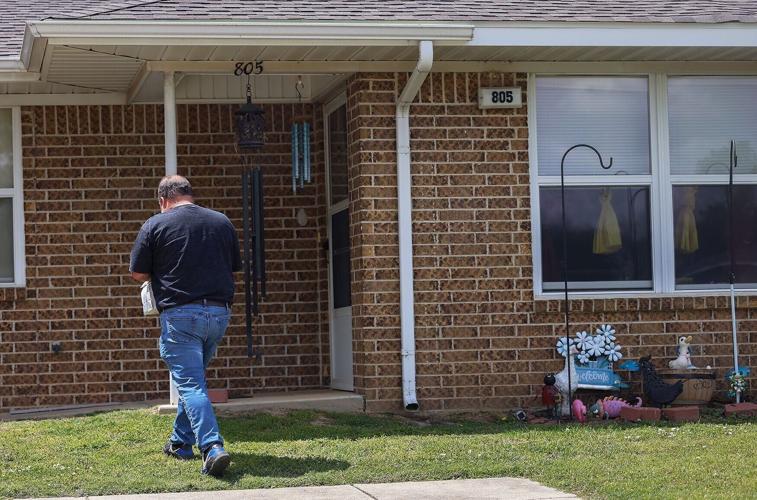
Chris Clubbs walks up to a patient’s house to deliver medication on April 23 in Campbell, Mo. Malden Pharmacy’s last delivery driver left to be closer to family, and Clubbs has taken over the task in the afternoons on top of his responsibilities as a certified pharmacy technician in the mornings.
“There’s no reason we shouldn’t be able to go out and just pick a pharmacist or a pharmacy. … It puts our fate completely in whatever pharmacy, whatever pharmacist we get thrown on by Tricare,” Alexander said.
Alexander used to be a patient at the AuBurn Pharmacy in town under the care of pharmacist Brittany Domagalski. When his prescriptions were sent to AuBurn, Domagalski would fill them and send Alexander a text when they were ready. Pickup was more flexible than at his current pharmacy: he could stop by AuBurn up to three days before he ran out of medicine.
“We were counting our blessings that we stumbled upon them, because we had just never been treated so kind and caring and respectful,” Alexander said.
Alexander could go through Express Scripts to get some of his prescriptions mailed to his doorstep.

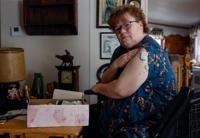
Malden Pharmacy patient Caroline Milam sits for a portrait on April 23 at her home in Clarkton, Mo. Milam and her parents are each on more than 10 different medications. “Even if the copay’s a little bit higher (than going to a larger pharmacy), I would still always go to (Malden Pharmacy) because I love the service,” Milam said. “I love to be able to pull up and say ‘Hey Phil, what’s going on?’ and ask about his kids, ‘how are your parents?’ You have a personal relationship with the pharmacist compared to the big corporate where whatever employee is assigned that week is all you’re going to get.”
“My wife and I are contemplating getting the mail (order), but everybody that we’re talking to about the mail one (says) that that’s really unreliable as well,” Alexander said. “And if they don’t send it in time, then you’re still at the mercy of then having to go to the pharmacy and tell them that those mail (order) prescriptions didn’t arrive in time.”
“We’re scared about doing that as well. But I think that that might be our only avenue here because it’s just too much for us to make these constant trips to and from the pharmacy,” Alexander said.
His family ultimately decided against the switch.
With only 29 pharmacies, AuBurn’s smaller size means it has less power to negotiate contracts. Eventually, AuBurn lost so much money from filling Tricare and other Express Scripts plans that it ended its contract with the company.
AuBurn’s contracts with pharmacy benefit managers often leave the pharmacy losing money for each prescription filled, as reimbursements from PBMs can fail to cover the cost.

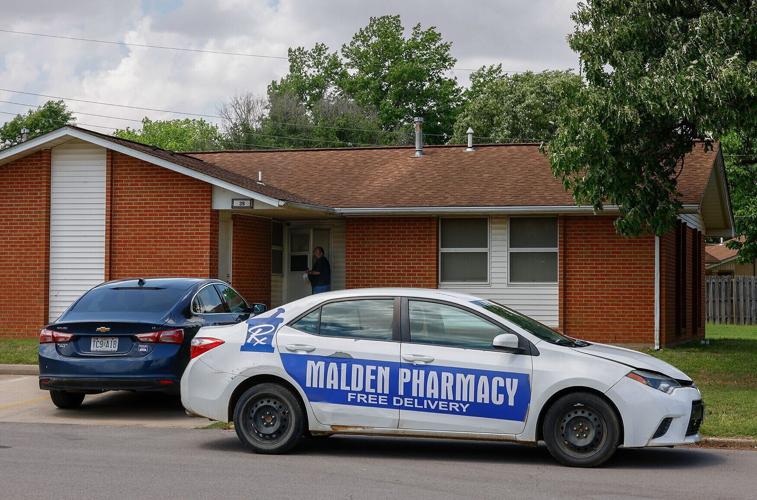
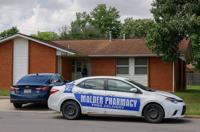
Chris Clubbs delivers medication to a patient on April 23 in Clarkton, Mo. Malden Pharmacy purchased John’s Pharmacy in Gideon last year when it closed, and the current delivery car was part of that purchase.
National pharmacy networks often have more leverage to negotiate contracts with benefit managers like Express Scripts, such as Walgreens, which has approximately 8,000 locations in the U.S.
Behind the counter at AuBurn, the pharmacy computer keeps a provisional tally of how much the store earns or loses from each prescription. But on the job, Domagalski’s focus often turns to sorting out pharmacy coverage issues for her patients.
“It is a constant battle trying to get things covered for patients, and in a timely manner too, because when people need something it’s because they have something going on, whether it’s an illness, a chronic disease, something acute,” Domagalski said.
Kelcey Blair worked at Express Scripts, headquartered in St. Louis, for over a decade. She eventually became the company’s vice president of clinical and trend solutions. Blair started in 2009 as a pharmacist at the company, but over the years, more promotions came with more access to financial discussions.

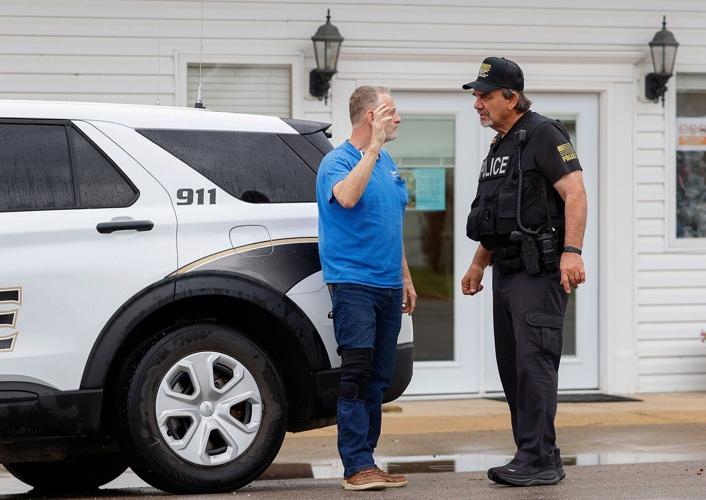
Mike Roberts, Gideon Housing Authority maintenance manager, speaks to Gideon Police Chief Danny Lacewell on April 24 outside of the police station in Gideon, Mo. The police station is located in the space John’s Pharmacy formerly occupied. Roberts, a former John’s Pharmacy patient who lives in Bernie, said he switched to Walmart in Malden instead of Malden Pharmacy because scheduling a delivery during the week can be tough.
“The more I saw, the more I learned,” Blair said, “and the more it forced me to reflect on myself and my integrity and to say, ‘Is this really what I want to be a part of?’”
Blair said one of the reasons why she left was because the closure of independent pharmacies was accepted as a part of Express Scripts’ growth.
She was raised in Gideon, a small town in the Bootheel. Blair grew up seeing her neighbors struggle with healthcare.
“I’ve actually seen it, where others, I don’t think that they’ve ever really had to contemplate, ‘Hey, that’s my aunt that had to drive just another, you know, 20 miles, which may be another 45 minutes out of her way, just to go pick up her medication.’ Oh, and by the way, that’s every single month. That’s not just one time. That’s now the standard for this person,” Blair said.
Gideon’s only pharmacy closed last March.
No money, no pharmacy
Blair’s mother, Marinda Thornbrough, used to work for Dick Jones in the early 1970s at Gideon Pharmacy, which was owned by the town’s Gideon-Anderson Lumber and Mercantile Company. The store sold sodas and sandwiches. If someone walked in and told Jones their symptoms, he’d find the best solution and compound a drug or a salve to help.
At the time, most people in America didn’t have a pharmacy benefit manager to oversee their care. They just walked in.
“It was a totally different time,” Thornbrough said. “You could walk wherever you needed to go.”

A Malden police car drives past a building that previously held multiple different pharmacies, including a Walgreens at one point, down the street from Malden Pharmacy on April 24 on Main Street in Malden, Mo. Malden Pharmacy is the only independent pharmacy serving the area, which also has a hospital-owned pharmacy and a Walmart Pharmacy.
The pharmacist, who Thornbrough still calls “Mr. Dick,” eventually had to leave the shop after he got cancer. Without another pharmacist to take over, the company shut down the pharmacy.
In its heyday, Mayor Lindal Cossey said Gideon had three grocery stores, three gas stations, a Western Auto and the Gideon-Anderson company that manufactured beverage crates. When Gideon-Anderson Lumber and Mercantile Company shut down in 1978, many of those who could afford to go left too.
“We’re just like any other Southeast Missouri town. No money,” Cossey said.
Thirty years after the company left, Funk, a pharmacist and business owner, decided to bring a pharmacy back to Gideon. He opened a location right in city hall in 2015.

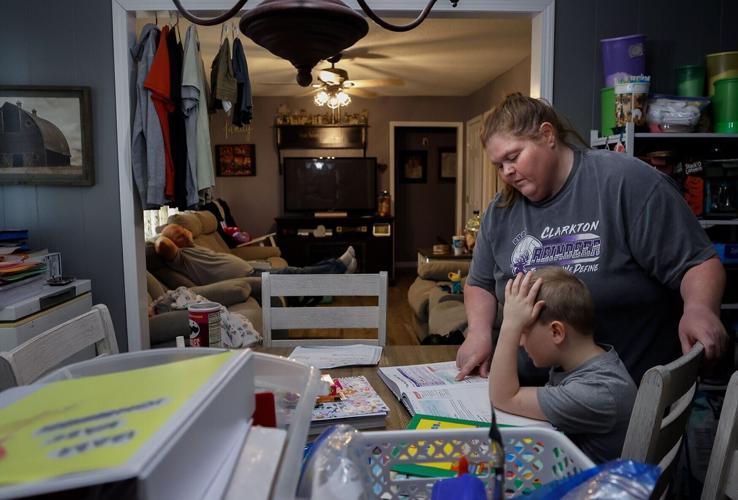
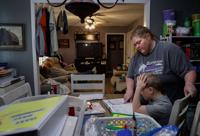
Former teacher and stay-at-home mom Melissa Johnson helps her son, Liam Johnson, 7, do homeschool on April 23 at their home in Clarkton, Mo. Melissa Johnson went through the drive-thru earlier that day to pick up her medication. “We don’t have no access to pharmacies unless we go to Malden,” Johnson said. “And that’s not too far, it don’t bother me because I’m blessed and I have a vehicle, but other people? They don’t have that. But (Malden Pharmacy does) deliver medication, that’s a plus, that’s a really good deal because then people get their medication, but I’ve even seen it before where people have got their medication but then they can’t pay their little $3 copay and they don’t get their medicine. And I’m thinking, you know, what if that person needed that heart medicine that night and then they pass away?”
Funk and his wife, Emily Funk, own John’s Pharmacy, a small chain that operates in Southeast Missouri. The Funks took over the business from Emily Funk’s father. The Gideon location was the first pharmacy Abe Funk opened on his own, despite knowing the location wouldn’t be a money-maker from the start.
Pharmaceutical care was now a walk away for many of the town’s approximately 662 residents. And if they couldn’t walk, the pharmacy usually had a delivery car ready to go. The location was also convenient for some residents in surrounding areas, such as Clarkton.
Funk knew he would be helping patients in need.
“‘I’m not dealing with people down there who are driving Escalades around. Who cares if they have to drive an extra 20 minutes to get their prescriptions?” Funk said. “These are people who don’t have gas money, if they have a car. Who are really struggling, who are making not much of anything if they’re making anything … these are people too.”
Funk is no stranger to these kinds of challenges: as a kid growing up in Georgia, his parents would say they weren’t poor. But Funk remembers coming home some days with the water off or the power off.
“We didn’t know any different because everyone around us lived the same way. But I remember those things … I know there’s people here that don’t have water. Don’t have power. And I relate to that,” Funk said.

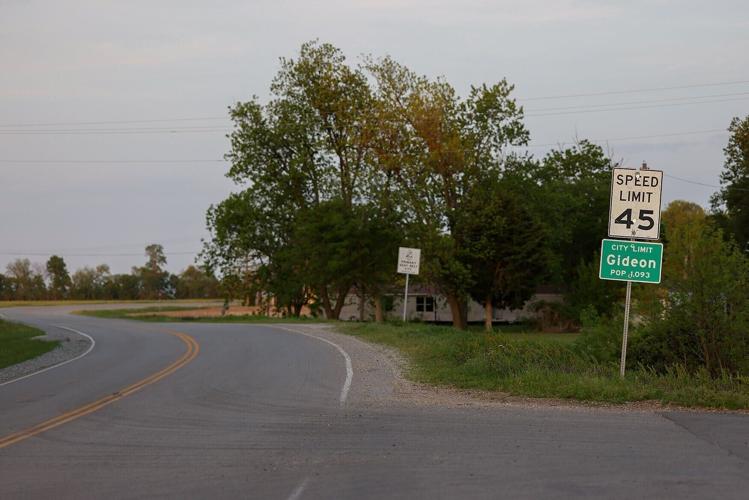
MO-162 curves into the town of Gideon on April 23 in Gideon, Mo. The U.S. Census Bureau reported a population of 1,093 in the 2010 census data and 662 in 2024.
Funk said the pharmacy was embraced by the residents, but never made enough to stay afloat. Ultimately, low reimbursement rates from PBMs combined with fewer customers made the location untenable.
“The last few years it just got worse and worse and worse to the point that my other pharmacies were subsidizing that one just to keep it open,” Funk said. “You can only do that so long.”
The hardest part for Funk was having to leave behind the people the pharmacy served.
After over 20 years in the industry, Funk has watched as fewer pharmacy benefit managers take over more of the market. With a small number of large companies controlling how pharmacies can be reimbursed, Funk said there’s no room for negotiation for small independent operations like his.
Gideon is in the middle of three towns about 10 to 15 miles away that have pharmacies. But even then, care at the closest option isn’t guaranteed. Cossey goes to the Walgreens almost an hour away to fill his prescriptions through his Tricare plan.

The sun sets on April 24 along MO-162 in Gideon, Mo. Gideon has a total area of 1.8 square miles, according to the United States Census Bureau.
“It makes it that much harder for us,” Cossey said.
Through Tricare, Cossey could fill his predictions at the Delta Regional Pharmacy in Malden, but he says one of the problems of finding a pharmacy is that “you just never know until you walk in the door.”
What the patient doesn’t see
Technically, a patient using a pharmacy benefit manager plan could fill their drug at any pharmacy, if they wanted to pay full price without their insurance benefit. But the cost of getting care at an “out-of-network” pharmacy can add up.
For example, in Columbia, a patient on a Wellcare Medicare plan could get a commonly prescribed diabetes medication, metformin, for free at CVS, Walgreens or through mail order. But at Flow’s, an independent pharmacy, or Walmart, one year of that one drug would cost $180.

“If you’re on 10 drugs a month, which is not uncommon for our senior population, are you going to pay an extra $200 to $500 every single month just to come here?” Funk said. “No. No, no one’s going to do that. Most people can’t afford to do that if they wanted to.”
But proponents of PBMs say creating a pharmacy network can help employers push down health plan costs.
Blair, the former Express Scripts employee raised in Gideon, said that a lot of times, cost savings for employers come from not paying pharmacies very well.
“It took me quite a long time to figure out, oh, when you brag as a PBM about doing these things that sound good, you kind of forgot to explain that to make an omelet, you have to crack a lot of eggs. And in this analogy, the eggs are the pharmacies,” Blair said.

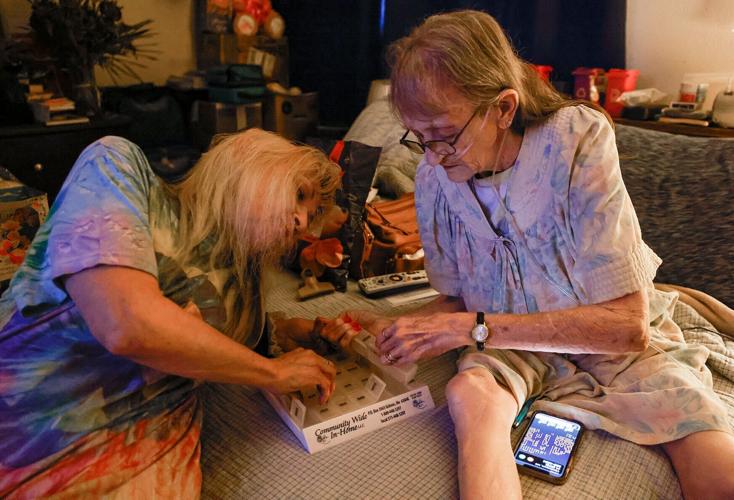
Malden Pharmacy patient Dorothy White looks over her weekly pill box on April 24 at her home in Gideon, Mo. White was a patient of John’s Pharmacy since it opened, and now goes through Malden Pharmacy. She usually gets her medications delivered because it’s free and she lives in another town.
An Express Scripts spokesperson took issue with that.
“We want patients to have broad access to a wide range of thriving pharmacies, and fundamentally reject any assertion to the contrary,” the spokesperson said. “… Pharmacies that serve rural or underserved communities are eligible for enhanced reimbursements recognizing their critical role as a front door to care. This approach is intended to move away from volume‑driven economics and toward rewarding care, access, and outcomes.”
Express Scripts’ IndependentRx Initiative was launched in 2023 to increase reimbursements to some independent pharmacies. To qualify, the pharmacy must be the only pharmacy within 10 or more miles from a patient using Express Scripts, and must be unaffiliated with a drug wholesaler.

Dorothy White, right, and her daughter Sonia Staires organize her weekly pill box on April 24 at their home in Gideon, Mo. While White is content with the service now, she previously had an issue with Malden Pharmacy’s timeliness in delivery. “The doctor called in some medication for me that I had to have that day and it wasn’t going to be delivered until the next day or next couple of days,” White said. “I finally got it … when I threatened him I was going to switch over to (Delta Regional Pharmacy).”
Blair said the pressures benefit managers face from clients — the employers — are often understated. Large health plans like Blue Cross Blue Shield of Illinois can serve upwards of 9 million members.
“You could be a mega client like that, that brings in millions of bucks that they themselves have a lot of leverage that tells the PBM, ‘I need better pricing. You need to go press on your pharmacies harder.’ And so, as a result, the PBM will do that,” Blair said.
Mark Dalton is the Missouri political director for the Mid-America Carpenters Regional Council. The union currently uses Express Scripts to manage pharmacy benefits for its members. The union’s plan benefits include a cost breakdown dashboard for members.
He said the union benefits from working with Express Scripts, especially when it comes to cost savings and plan customization.

Sonia Staires inspects a bottle of her mother’s medication on April 24 at their home in Gideon. “Friday is pill day, and she’ll fuss at me because she likes me to do it, her pill tray … I like to do it, it’s fun, but she’ll get impatient or she’ll do it and not tell me she did it. … If she wants me to do it, then leave me alone and let me do it! If you want to do it, then go ahead,” Staires joked.
“The PBMs offer several different ways to provide coverage and to maximize customize our benefits for our members,” Dalton said. “They lay out all of the different options and we work with them on specific things that we want to see in our plan.”
Dalton said the mail order program the union participates in for specialty drugs saves their health plan over $5 million every year.