


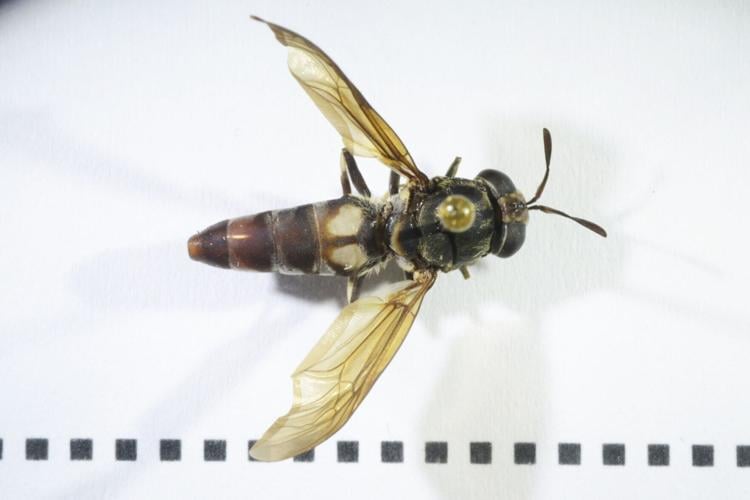

Dipteran of the family Stratiomyidae, characterized by patterns of mimicry with wasps and bees. (Juan Manuel Calvo Martin via SWNS)
By Stephen Beech
Early Europeans ate beetles and other creepy crawlies, according to new research.
But the ingestion of bugs was likely by accident, suggests the study.
The findings, published in the journal Science Advances, come from a forensic analysis of dental plaque from early humans, dating back up to 33,000 years, Neanderthals, and great apes.
The study suggests that insect consumption was "sporadic and accidental" in Europe, Central and East Asia, while it would have been more frequent in tropical regions and among Neanderthal populations.

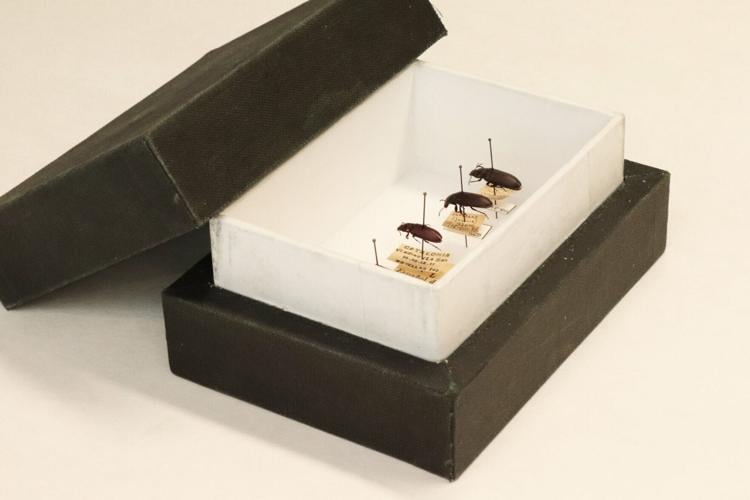
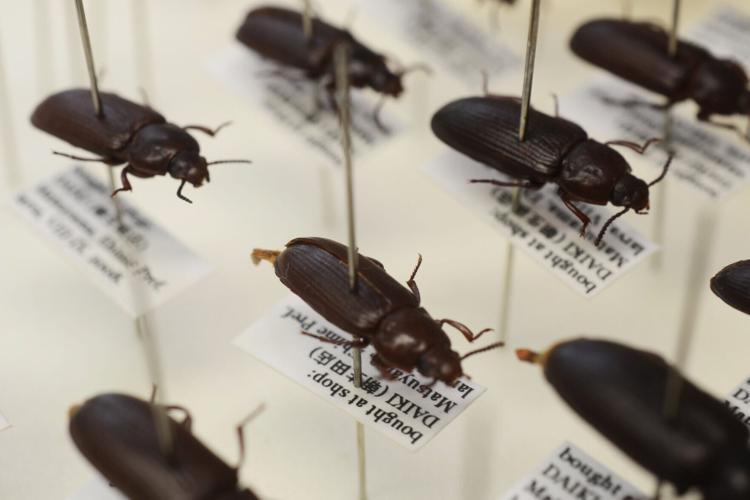
Museum samples of Tenebrio molitor. (Juan Manuel Calvo Martin via SWNS)
Additional research showed that prehistoric European foragers lacked the genetic assistance necessary to digest chitin, the key component of bugs' body armor.
With 1,611 insect species listed as edible, they have been suggested as a way of supplementing increasing human dietary needs as the world's population continues to soar.
But while many societies already eat insects, western ones tend to shy away from the practice, citing a lack of a cultural precedent.
Now, the new study has discovered that prehistoric European humans did in fact engage in insect eating, or entomophagy.
However, the findings suggest it was rare and accidental.

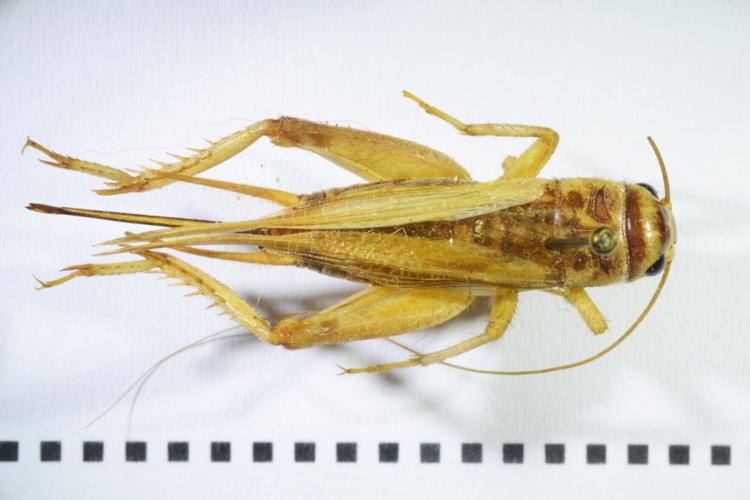
Field cricket (Gryllus sp.). (Juan Manuel Calvo Martin via SWNS)
Researchers from the Institute of Evolutionary Biology (IBE) in Barcelona, Spain, conducted state-of-the-art analysis of dental plaque from teeth of 18 Neanderthals and 745 anatomically modern humans.
They also sequenced DNA in plaque from 96 great apes known to eat insects.
Ancient human plaque had traces of insect DNA, but at levels far lower than those in samples from gorillas, western chimpanzees, and Neanderthals.
Using data from the 1000 Genomes Project, the researchers then investigated whether prehistoric human foragers had alleles that support the enzymatic breakdown of chitin in the stomach.
They found that pre-Neolithic European humans did not have them.

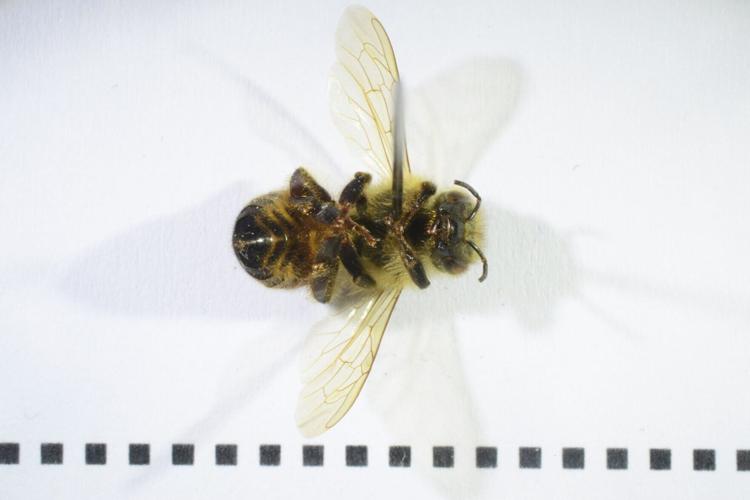
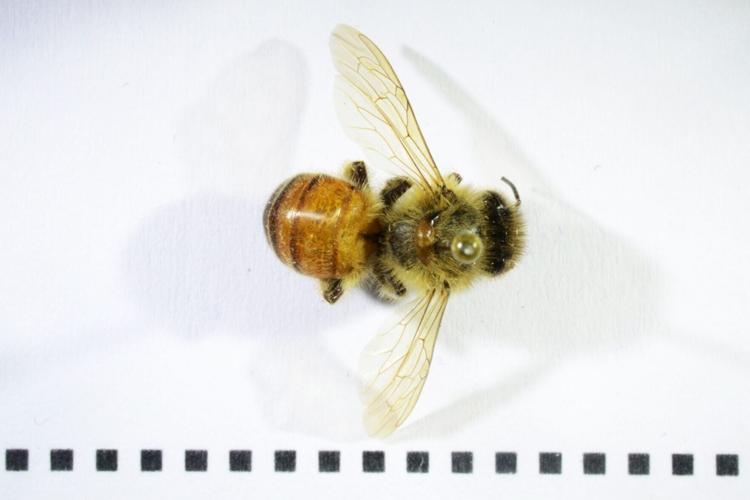
Western honeybee (Apis mellifera). Bees are among the insects traditionally consumed in different human cultures. (Juan Manuel Calvo Martin via SWNS)
Study leader Pablo Librado, principal investigator at the IBE, said: "The scarce presence of insects in the diet of northern Eurasians suggests that the absence of entomophagy is not solely due to recent cultural factors, but also to a long ecological and evolutionary history."
The findings showed that, despite inhabiting the same environment, Neanderthals had a greater abundance of insect DNA in their dental calculus than anatomically modern humans.
The research team said that the levels in Neanderthals are comparable to those found in western chimpanzees, which rely on entomophagy to supplement their diet, especially during periods of drought.
The most abundant DNA remains in Neanderthal tartar belong to Diptera, the insect group that includes flies and mosquitoes, with the latter being particularly prominent.

Western honeybee (Apis mellifera). Bees are among the insects traditionally consumed in different human cultures. (Juan Manuel Calvo Martin via SWNS)
The findings support a recent hypothesis about the regular consumption of animal carcasses infested with fly larvae.
The researchers said that the abundance of mosquito remains reinforces the possibility that the carcasses of their prey were kept in ponds and marshy areas, where mosquitoes lay their eggs.
The study also revealed that Neanderthal chitinase genes facilitate better digestion of insects, as also observed in the only Denisovan specimen analyzed.
The team analyzed genes linked to the digestion of insect exoskeleton chitin.
The genes are expressed in the stomach and encode the enzymes chitinase acid (CHIA) and chitobiase (CTBS).
In both ancient and modern samples, the researchers identified genetic variants associated with a greater expression of those enzymes in populations inhabiting areas near the tropics.
Study first author anuel Piñero, a predoctoral researcher at the IBE, said: "Large quantities of insects need to be ingested to compensate for the high caloric expenditure involved in their collection.
"In the tropics, there is a greater availability of social insects, such as termites and locusts: their biomass and diversity allow for sustainable exploitation throughout the year, which even contributes to pest control."

Museum samples of Tenebrio molitor. (Juan Manuel Calvo Martin via SWNS)
The expression of the enzymes gradually decreased as populations moved toward higher latitudes.
Librado says the latitudinal genetic variation, maintained for at least 9,000 years, reflects the abandonment of entomophagy in European populations.
He said: "Beyond cultural or religious factors, our results suggest that the reduced availability of insects in non-tropical areas may have been a key factor in the abandonment of entomophagy, leading to a reduced capacity to digest insect exoskeletons."
But he says modern industrial processing allows us to take advantage of the nutritional properties of the food source without needing to digest that component, in addition to allowing its mass production in edible insect farms.
The Ancient Population Genomics research group, led by Librado at the IBE, studies the domestication process, using insects recently approved for human consumption as a model and by comparing the genomes of farmed insects with the genomes of pre-domestication individuals extracted from entomological collections.
Librado added: "We investigate the evolution of domestication in animals, which also gives us information to improve the exploitation of insects for consumption, both as animal feed and for human consumption."