


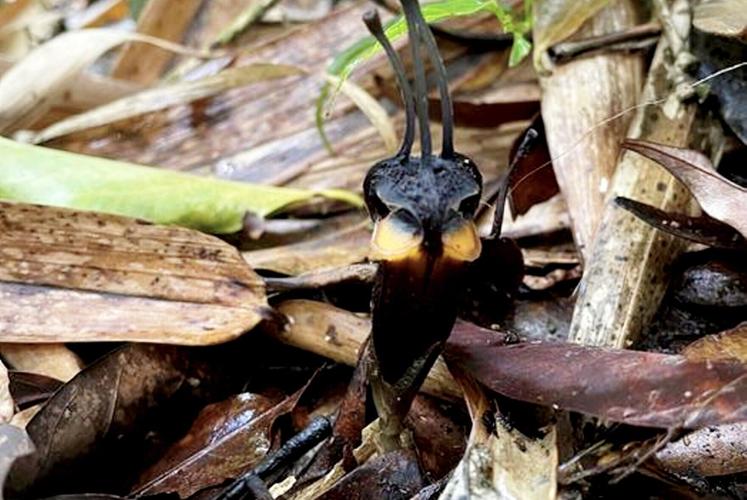
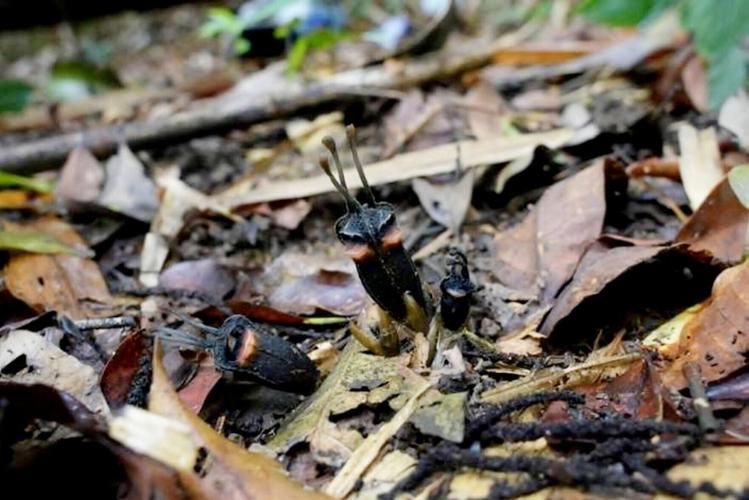
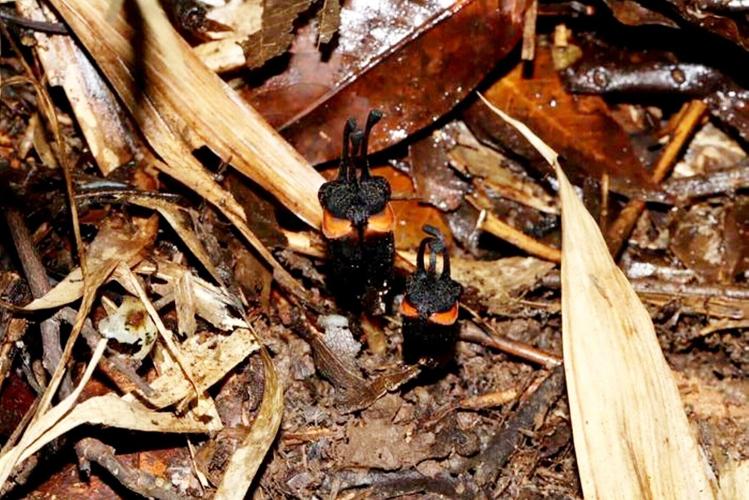

Thismia daemona in natural habitat. (Tosak Seelanan via SWNS)
By Stephen Beech
A newly discovered plant species has been named the "devil flower" because of its demonic appearance.
The leafless flowering plant is mostly black with "horn-like" appendages, say scientists.
It was found on the forest floor within a national park in western Thailand and was given the name Thismia daemona — or "devil flower" — due to its menacing looks.
The species belongs to Thismia, a genus of small plants sometimes called "fairy lanterns" which, unlike most plants, contain no chlorophyll and cannot photosynthesize.

Thismia daemona in natural habitat. (Sahut Chantanaorrapint via SWNS)
They instead draw nutrients from underground fungi and spend almost their entire lives hidden beneath leaf litter.
The new species was found by Thai botanists during surveys of Thong Pha Phum National Park.
It was discovered growing at an elevation of nearly 1,000 meters (3,280 feet), which experts say is an unusually high and seasonally dry setting for the genus.
Sahut Chantanaorrapint said: "Finding Thismia daemona in Thong Pha Phum National Park was indeed a major surprise.

Thismia daemona in natural habitat. (Sahut Chantanaorrapint via SWNS)
"Typically, Thismia species are known to occur in perennially humid lowland rainforests, however, this population was discovered in a seasonal, montane evergreen forest at an elevation of nearly 1,000 meters above sea level."
The new species belongs to Thismia section Geomitra, previously known only from Peninsular Malaysia, Borneo and Sumatra, so its discovery pushes the known range of the whole section northward for the first time.
Chantanaorrapint says the looks of the "devil flower" live up to its name.
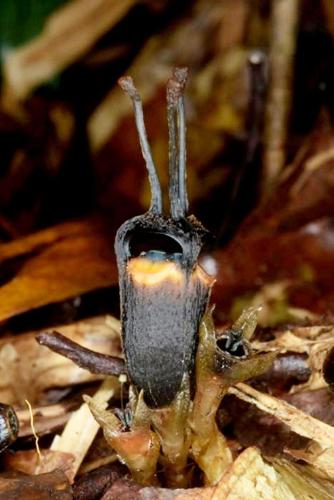
He said: "The flower is mostly black, with horn-like appendages crowning a dome shaped 'mitre' — while patches of vivid reddish orange around its base recall a demon's glowing eyes.
"Combined with its hidden, subterranean and mysterious lifestyle on the forest floor, our team unanimously agreed that naming it Thismia daemona perfectly captured its enigmatic and devil-like essence."

Thismia daemona in natural habitat. (Neeranuch Taosiri via SWNS)
But botanists say the flower's future is "precarious."
Known from a single population of fewer than 50 individuals in an area smaller than a football pitch, it has provisionally been assessed as "Critically Endangered" — partly because its habitat sits within a national park popular with tourists.
Chantanaorrapint, from Prince of Songkla University in southern Thailand, said: "A key next step is adopting a sustainable conservation approach aligned with the UNESCO Man and the Biosphere concept, harmonizing biodiversity conservation with human engagement."
He added: "Inspiring local people to take pride in their natural heritage not only safeguards the microhabitat, but also supports sustainable, community led ecotourism."
The discovery, described in the journal PhytoKeys, took the number of Thismia species recorded in Thailand to 16.