
The attacks on September 11th, 2001 sent shockwaves across the country. As the world watched the heartbreaking video from New York and our nation’s capital, the United States military moved into action, including at Malmstrom Air Force Base.
While the base is a key part of the nation’s defense, it's more than just missiles and planes. Thousands of service members and their families call it home.
“So many lives changed that day,” said Melissa Laferriere. “You know, so many things changed. And I don't think others know how much it affected people, unless people are willing to share their stories.”
Laferriere works as the Deputy of the Education and Training Center at Malmstrom Air Force Base in Great Falls. In September 2001, she was married to an airman stationed at the base. They lived in off-base military housing with their two young children.
On the morning of the attacks, she took her kids to a neighbor's house so they could watch the news and the kids could play.
Laferriere recalls the neighborhood being eerily quiet. The stillness of the morning was quickly shattered as alerts came across the on-base PA announcement system.
“And then our security forces members began driving in their patrol cars up and down the streets, letting everybody who was outside know that they needed to go indoors and to make sure they closed their blinds, lock their doors,” she recalled. “We didn't know what was happening. We didn't know if bases were being attacked.”
Malmstrom is a critical piece of the nation’s defense. It’s home to the 341st Space Wing, which maintains the intercontinental ballistic missile network in the area, and numerous other units. According to U.S. Census data, around 4,000 people lived on base in 2001, including military members and their families.

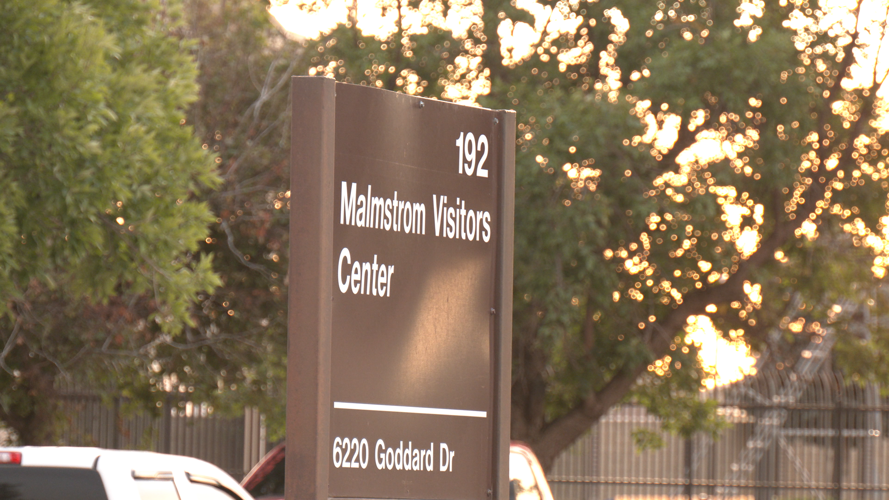
Malmstrom Air Force Base
Deanne Shaddrick was a sergeant at the on-base clinic at the time; top of her mind that day was the lives lost and what this means for everyone going forward.
“Really, I thought we were going to go to war,” she noted, “Because keep in mind, the clinic, patient care, we worry about emergencies and triage and those kinds of things. So now we're talking about deploying our personnel, and we're talking about putting them on the front lines and putting them in danger.”
Malmstrom operates as a small city, with recreation, housing, shopping, education and health care services in addition to the combat support missions.
The attacks signaled to families on the base that their loved ones and friends may soon be deployed thousands of miles away.
“You know, you've got the families that are worried about their people who are going to be in that position where they have to deploy, in forward deploy. And there were a lot of worried people,” recalled Shaddrick.
Laferriere’s family was one of those who were impacted immediately.
“Later that evening, the kids’ dad had come home and said that things didn't look like it was ever going to be normal again,” she explained. “So we knew that something was going to happen. And he was part of what's called ‘Prime Beef’ and they are the first to deploy out of CE or the Civil Engineer Squadron.”
The night before he deployed, they went to McDonald's for their son’s birthday.
“That night we took so many pictures trying to capture everything that we could to make sure that the kids would always have a memory of their dad if something… If the unthinkable happened,” Laferriere noted.
The following months were difficult for Laferriere and her family.
“I knew what he had signed up for, but my kids didn't,” she explained.
Families and those still on base worked to support each other, helping out with chores, childcare and providing support groups. Thanksgiving that year was particularly tough for many families.

United States Air Force
“We spent it with our neighbors who were active duty too and they were home,” Laferriere noted. “So it was kind of hard to explain to the kids, ‘Hey, he's in the military and he gets to be home with his kids, but your dad doesn't get to,’ and they don't understand that everybody's parent has a different job or a different mission.”
He made it back, but things fundamentally changed at the base after the attacks.
“There were certain things that we couldn't do anymore. Little things like going to the airport and walking our family members all the way to the gate,” Laferriere noted.
“A lot of lockdowns. There was a lot of extra security. There was a lot of extra checking of the vehicles, checking the person,” explained Shaddrick.
Before the attacks, the base was at FPCON Alpha, the lowest security level. Following the attack, the base ramped up to Delta, the highest level. Twenty-five years later, it has never dropped below Bravo.
Life at the base moved on and adapted to the new normal. Twenty-five years after life fundamentally changed in the United States, the families of Malmstrom still remember and honor the lives that were lost.
“A lot of us hold in a lot of what happened during that time. And we weren't even the ones that were there when those 2977 people were murdered,” said Laferriere. “And so that's, I think, one of the things that we need to remember, and those of us who were old enough to experience it. We kind of play back that Alan Jackson song. Where were you when the world stopped turning that September day?... What have you done to make the world a better place?”