


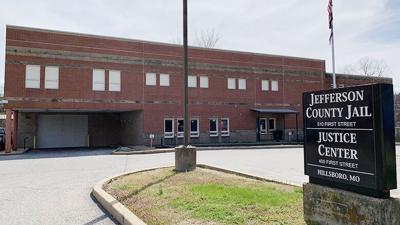

The cost to provide medical care for inmates at the Jefferson County Jail has risen steadily for the past four years, with no sign of stopping, county officials say.
Undersheriff Tim Whitney of the Jefferson County Sheriff’s Office said the county’s contract with medical care provider VitalCore Health Strategies rises by about 3 percent, or roughly $27,000, each year.
The county has paid approximately $3.687 million since 2021 to provide medical care for inmates, including yearly change orders. The actual contracts called for the county to pay a total of about $3.52 million for those services since 2021, and the change orders totaled $157,447.54, increasing that cost.
Whitney said VitalCore is paid monthly for medical services, which include round-the-clock nursing, routine medical doctors’ visits, a full-time mental health professional, pharmaceuticals, and a mobile dental unit.
The County Council voted unanimously June 24 to approve an $80,000 change order for VitalCore, which increases the $879,009.42 contracted cost for this year’s services to about $960,000.
“The cost of this service for the jail is continually escalating,” said Councilman Charles Groeteke (District 4, Barnhart). “We would just like to note that this year is going to be over $900,000 just for health care services for the jail, so this is a big-ticket item for the Sheriff’s Office. It has to be done but it’s quite an expense – incarceration and health care.”
Whitney said despite the rising health care costs, those increases are more easy to predict and budget for than other Sheriff’s Office expenses, including employee pensions, general liability, and automotive insurance.
“In terms of our medical costs growing, it’s not necessarily alarming; it’s more of a fixed cost for us,” Whitney said. “Those change orders are almost a seasonal thing with a contract like this.”
The county has used VitalCore, based in Topeka, Kan., since 2019. According to the 2019 contract, the county paid about $596,000 for the first year of services – approximately $364,000 less than this year’s costs of $960,517.33 so far.
VitalCore began offering correctional health care consulting services in 2015 and expanded its services in 2018, the company’s website said.
In 2021, the county entered into a new, four-year contract with VitalCore.
According to county records, the contracted costs for Vital Core’s services were $879,009.42 in 2021, $905,379.70 in 2022 and $932,541.09 in 2023.
The county may extend the contract another two years pending council approval, Whitney said. Services would cost $989,332.85 in 2025 and $1,019,012.83 in 2026. This would be an increase of $140,003.41 from the cost of services in 2021.
“We were really lucky when we first switched to VitalCore because they were a new company, or new to the market,” Whitney said. “They were willing to give us more for less at the time, but now they’re a well-established company. Their pricing is still significantly cheaper than the others we’ve had bids for, but there certainly was that jump there (when the county entered a new four-year contract with VitalCore in 2021).”
Because the Jefferson County Jail houses federal inmates, certain operational costs are offset by federal funding. However, the jail does not receive reimbursement from the federal government for jail medical services, Whitney said.
In 2023, the county was reimbursed $877,876.69 for housing federal inmates, and the jail is “on pace in 2024” to have similar reimbursements, he said.
“The total cost to operate the jail, including staffing, medical, food, supplies, equipment, etc. is nearly $6.5 million (a year),” Whitney said. “We use the money from housing federal inmates and contracts for inmate commissary and phone services to offset nearly 28 percent of operational costs. By offsetting these costs, we significantly reduce the burden of the taxpayer to fund jail operations.”
The state government also does not reimburse the county for medical expenses, but the county is required by state law to take on the burden of medical expenses when state inmates require care at a hospital, Whitney said.
“(Inmates), like you and I, are responsible for the cost of their hospital visits, so we do not incur any costs (for those visits) other than the costs of deputies to ensure their security,” Whitney said. “For some medical visits within our facility, we are allowed to bill the inmate, which we do. We receive $15,000 to $20,000 annually in prisoner reimbursements.”
According to state law, if an inmate does not have health insurance or adequate coverage for a necessary medical service, it is up to the prisoner to provide payment.
The County Council may at times authorize payments of certain medical costs that it deems “necessary and reasonable,” according to the law, if the inmate can’t pay.
“The challenge with stuff like this is you have people in the community ask, ‘Why are you providing health care to inmates?” Whitney said. “Missouri Revised Statutes Chapter 221 is what guides us, and we have to maintain inmates’ health. At the same time, if you don’t have a good contract and you aren’t providing adequate medical services, you open up our community to liability. From a risk management standpoint, we need to protect our county community and make sure we get this one right.”