



Motorists who renew their driver’s license after March 25 may notice some changes once their replacement arrives in the mail.
Beginning on that date, Missouri will issue licenses that comply with the federal REAL ID Act.
The federal legislation was passed by Congress and signed into law by President George W. Bush in 2005 and, while many parts of the law have been in effect for years, federal legislators and states have tried to amend, repeal or delay the portion that calls for a standardized identification card.
The law was recommended by the 9/11 Commission, which called for the federal government to “set standards for the issuance of sources of identification, such as driver’s licenses.”
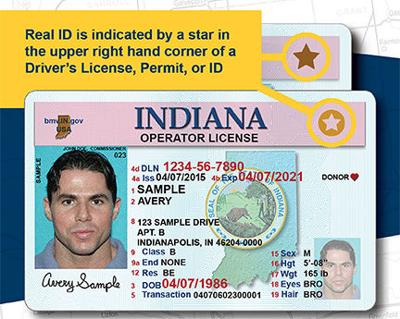
The new cards – issued as either driver’s licenses or non-driver ID cards by each state –will carry a star in the upper right-hand corner. In addition, states are to include machine-readable security features such as a bar code, a front-facing photo of the driver as well as the specific information about drivers that typically appears on licenses.
Under Missouri law, residents may opt to have a driver’s license that is not compliant with the law, according to the state’s Department of Revenue website.
However, after Oct. 1, 2020, forms of ID that are compliant with the law will be required to board commercial airplanes, according to the federal Department of Homeland Security. The site notes that a passport could substitute for the required ID card.
Also on Oct. 1, 2020, a REAL ID-compliant card will be required for admission into federal facilities, like military bases and federal courthouses, as well as into a nuclear power plant.
The state’s site notes that not everybody will need a REAL ID-compliant card. For example, it will not be required to drive, to vote or register to vote, to verify your age or for any purpose involving a state agency.
It also notes that obtaining a REAL ID-compliant driver’s license – or a state-issued ID for non-drivers – will cost the same as it does for one that does not meet the federal standards.
The attempt to standardize ID will not mean the establishment of a national database, according to the DHS site.
“REAL ID is a national set of standards, not a national identification card,” the site says, noting that each state will issue its own licenses and maintain those records.
Those whose licenses expire after Oct. 1, 2020, and believe they will need a compliant license before then may apply for an early renewal. The same applies to those 70 years old or older who hold a non-expiring driver’s license.
Alternately, state law allows residents to apply for a duplicate license that will be compliant. While the state will not charge its regular fees for one compliant duplicate, license offices will be allowed to charge their fees ($2.50 for a three-year duplicate and $5 for a six-year duplicate).
The law specifies information needed to apply for a REAL ID-compliant card, including:
■ A document to verify legal name and date of birth. Additional items may be required if your name is different from your legal name on that document.
■ A document to verify citizenship or immigration status.
■ Social Security number.
■ Two documents verifying Missouri residency.