



On Monday, the Festus City Council approved a new version of an ordinance restricting the feeding of feral cats. When the original version was passed on July 14, it raised the ire of some local residents who complained that it was cruel to outlaw the feeding of hungry cats.
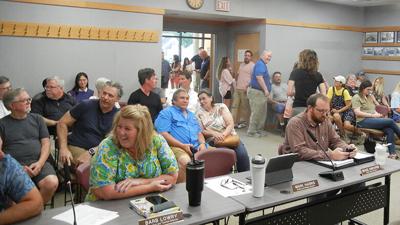
A crowd of 50 or more people filled the Council Chambers and spilled out into the City Hall lobby for Monday’s meeting, when the council approved the new version of the ordinance that included details about a trap, neuter and return policy Festus already had in place. That additional language seemed to quell the controversy stirred up when the original version of the legislation was passed.
Council members voted 7-0 Monday to pass the new ordinance. Councilman Kevin Dennis of Ward 3 was absent from the meeting.
After the original ordinance was passed earlier this month, a number of people reportedly contacted city officials to complain about it. However, those who turned out for Monday’s meeting seemed satisfied when they learned the intent of the original ordinance was not to harm the feral cats, but to control the feral cat population.
“The detail that was missing was, ‘How does a trap-neuter-return program work?’” Camp said during a work session held immediately before the regular meeting.
Camp said the city has practiced TNR for some time, but the practice was not included in the ordinance approved on July 14.
Stacey Kinsey of Pevely, who leads the Kitty Moon Catchers nonprofit group that promotes TNR, said she had spoken to Camp in the days leading up to the Monday meeting and praised him and the council for listening to those concerned about feral cats.
“I think it’s great,” Kinsey said. “They just needed to change some wording in the ordinance.”
Both versions of the ordinance say it is unlawful to feed feral cats within the city, with the exception of temporarily feeding a feral cat for up to five consecutive days for the purpose of trapping it for TNR. Feeding a feral cat for longer than five consecutive days requires approval from the city’s Animal Control officer, according to both ordinances.
Both ordinances list the following penalties for violating it: a warning, along with educational materials for the first offense; a fine not to exceed $100 for the second offense; and a fine not to exceed $250 per offense for the third and subsequent offenses; and each day a violation continues constitutes a separate offense.
However, the new ordinance stresses the city uses TNR in its approach to handling the feral cat population. Wording in a staff report on the matter stated, “Following public feedback and concerns about its practicality and animal welfare implications, Bill No. 4832 incorporates a humane and data-supported approach known as Trap-Neuter-Return (TNR) and formally distinguishes between ‘feral cats’ and ‘community cats.’”
Community cats are described as “non-owned but cared-for, distinguishing them from wildlife and aligning with animal control standards,” according to the staff report.
The new ordinance calls for a TNR process “of trapping, sterilizing, vaccinating for rabies, eartipping and returning cats to their original location.”
The ordinance describes eartipping as the removal of one quarter of a cat’s left ear, which identifies it as a community cat that has been sterilized and vaccinated for rabies.
Residents concerned about feral cats may participate in the TNR program, and the city will supply traps for them to use, Camp added.
He said that while the city held off on enforcing the original ordinance after the public outcry, it will now be enforced following the approval of the new ordinance.
However, the city only takes action against people feeding feral casts if the city receives reports about the violations, Camp said.
“We’re not looking (for people feeding feral cats). It’s complaint driven,” he said.
At the end of Monday’s meeting, council member Michael Cook of Ward 4 said he was disappointed to learn city employees received abusive comments from the public, particularly online, after news of the original ordinance’s passing became known. Other council members and Mayor Sam Richards agreed.
Kinsey said she did not approve of the abusive comments and praised Camp and the council for their actions to clarify the city’s policy regarding feral cats.