


The Jefferson County Council has approved the Economic Development Corporation’s 2024 action plan required to apply for federal funding to assist the county’s families with low to moderate incomes.
Now the EDC waits.
Assistant Executive Director Rosie Buchanan said receiving annual funding is always a moving target and depends on the federal release of funds from Washington, D.C.
“In the years we’ve been doing this, I’ve seen us actually receive the money anywhere from the end of January to the middle of August,” Buchanan. “It’s a congressional release, and there’s no rhyme or reason.”
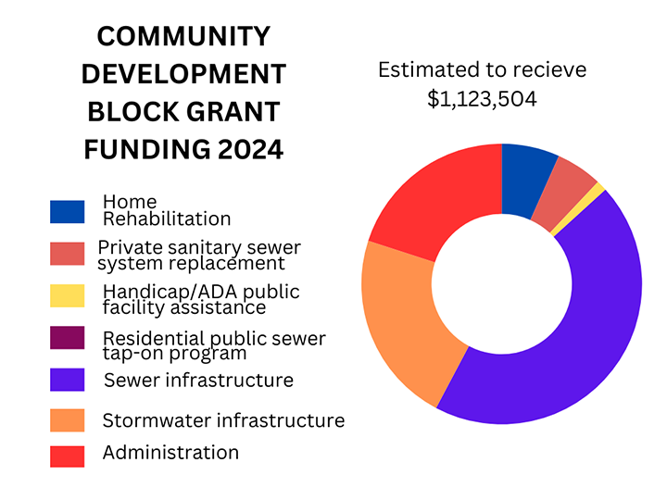
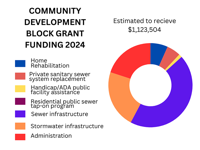
The EDC will receive an estimated $1,123,504 from the U.S. Department of Housing and Urban Development in 2024 to distribute through the Community Development Block Grant (CDBG) programs, which include home rehabilitation, private sanitary sewer system replacement and stormwater infrastructure. The EDC received the same amount in 2023, although Buchanan said the county has received less and less each year since becoming eligible for the grant program in 2004.
Despite the mountains of paperwork it takes to apply for the funding and the murky timeline for receiving the funds for Jefferson County, Buchanan said it’s worth it.
Since it was established 20 years ago, CDBG has put nearly $27 million back into Jefferson County to support families who need help.
The federal government uses a formula to decide how much the county is given each year, Buchanan said, based on the number of people in the county with low and moderate incomes. As the median income for Jefferson County rises year after year, Buchanan said the funding for CDBG lowers.
“That’s good for the county, overall, because it means we don’t have as many low-income persons, but yet it’s still a bad thing because funding goes down a little bit,” Buchanan said. “We try to make sure our programs are not affected. We don’t help any fewer persons.”

The county EDC programs are expected to receive the following funding from HUD through the CDBG program:
■ Homeowner rehabilitation program, $75,000
■ Private sanitary sewer system replacement program, $60,000
■ Handicap/ADA public facility assistance program, $13,803
■ Residential public sewer tap-on program, $1 (EDC is using leftover funds from previous years)
■ Sewer infrastructure program, $500,000
■ Stormwater infrastructure program, $250,000
■ Administration, $224,700
Buchanan said having a CDBG program allows the county to target issues specific to the county. The sewer replacement program, Buchanan said, aids homeowners with failing septic systems to replace the system and conduct routine maintenance on the new system.
“Failing septic systems are a huge issue in Jefferson County,” she said. “Very few areas in our county have public sewer available to them, and an average septic system can run anywhere from $20,000 to $30,000. That is a program that is huge for assisting those low-income families.”
Buchanan said every dollar the CDBG receives goes back to people who need it, adding that the EDC has assisted 107,754 people and 12,769 total housing units since 2004.
To apply for funding through one of the CDBG’s programs, visit the EDC’s office in Hillsboro, 5217 Hwy. B, which is open 8 a.m. to 4 p.m. Monday through Friday. Program guidelines may be found on the EDC website, jeffcountymo.org.
The county council voted 5-0 May 28 to approve the CDBG 2024 action plan. Councilmen Scott Seek (District 5, Festus) and Dan Stallman (District 6, De Soto) were absent from the meeting.
Councilman Charles Groeteke (District 4, Barnhart) said the CDBG is an important program for the county.
“It affects a lot of citizens,” Groeteke said. “They allocated a lot of money to different people in need.”