



Heart attacks may feel sudden.
In reality, they are the result of years or even decades of declining heart health, including the development of coronary artery disease (CAD). Too often, heart disease, the No. 1 cause of death in America, progresses because symptoms are ignored.
High cholesterol, high blood pressure and diabetes all raise your risk of heart disease. Good lifestyle choices such as not smoking, eating well and exercising can lower your risk. Genetics are also a factor, so anyone with a family history of heart disease is at risk.
CAD occurs when plaque builds up on the arteries’ inner walls causing them to harden. In the early stages, those narrowed arteries may not cause any warning signs. Over the years, as the arteries narrow further and cause the heart to work harder, symptoms start to appear. You may feel short of breath or fatigued. These can worsen slowly over time, so they might not be immediately noticeable. You might feel chest discomfort or pain, which can be mistaken for heartburn or indigestion. There can be referred pain with discomfort that spreads to your arms, shoulders, neck, jaw, throat or back.
It’s important to share your risk factors and any symptoms with your primary care physician, who can refer you to a cardiologist or go straight to a cardiologist. We will perform a physical exam and likely conduct blood tests. If needed, we can perform diagnostic scans to determine whether you have heart disease and, if so, how far it has progressed.
One of those diagnostics scans is cardiac CT angiography (CCTA), which allows us to use X-rays to see images of your heart and blood vessels. We use these scans to create a 3D image of your heart and arteries. From there, we can identify which arteries are narrowed, whether any plaque is soft and fatty or hard and calcified, how well the heart is pumping and even signs of any previous heart attacks. This great detail enables us to more precisely diagnose your condition, assess your risk for heart attack and determine the best treatment to improve your quality of life and maybe even prevent a heart attack. A CCTA can also show us congenital heart defects and how the ventricles are working.
When it comes to treatment, lifestyle changes are at the top of the list regardless of how much plaque or blockage we find. We always recommend a heart-healthy diet that is low in salt, sugar and saturated fats and limits or eliminates alcohol.
Everyone should quit smoking or, better yet, never start. And if your condition allows, get at least 30 minutes of daily exercise. We can prescribe medication to treat specific issues related to your heart. For the most advanced cases, we may recommend a procedural intervention such as placing a stent to open up an artery or performing bypass surgery to create new pathways for blood to pass.
Whatever your current condition, talk to your doctor so you can make informed decisions on protecting your heart.
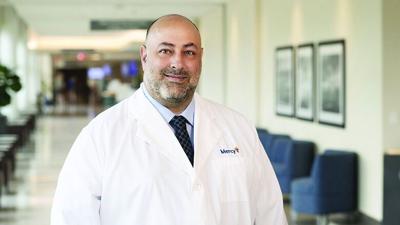
Dr. Bassem Mikhail is an interventional cardiologist with Mercy Jefferson. He sees patients at Mercy Clinic Cardiology – Jefferson and Mercy Clinic Cardiology – Farmington W. Pine.