



De Soto School District officials are working to determine how to spend money left over from the $19 million Prop 4 Dragons bond issue voters approved in April 2024.
Joshua Phipps, assistant superintendent of operations, told school board members on June 19 that the bond issue projects are roughly $300,000 under budget so far and that number could increase. He said with bond funding investments with First State Community Bank, the district could end up with $1 million to spend on additional projects.
“We are working through conversations about how to utilize those funds to continue improvements based on the bond language,” Phipps said. “This is something that we would work hand-in-hand with our bond oversight committee with to try to identify needs we’re looking at.”
At Phipps’ recommendation, the Board of Education voted unanimously to enter a memorandum of understanding with Daikin-TMi of Chesterfield for master planning. Daikin-TMi is the project manager of the district’s roofing and HVAC projects funded by the bond issue, as well as capital project-funded renovations to be completed this summer at the High School and Junior High School.
“The primary goal of the partnership (MOU) with Daikin, who is doing this at no charge to the district, is to see if any of the district’s three- to five-year needs can be addressed with remaining bond measure funds at the completion of the originally identified projects written in the bond measure language,” Phipps said June 27.
Daikin-TMi will gather information related to the district’s priority needs; study underutilized existing spaces and options; and provide cost estimates to the district.
“There’s actually almost a couple hundred hours of manpower that they are willing to offer,” Phipps said at the meeting. “I made them put very explicit language in the MOU to ensure that there wasn’t any expectation whatsoever of us utilizing them in project management or anything like that once we move forward. But I think they’ve done a great job really assessing the buildings. They are familiar now with our campuses, just through lots and lots of conversation.
“I think they have a good idea of what our district vision is, and so I think they can help us with some of our master planning, just in helping us utilize our spaces best and also mitigate cost and be as cost effective as possible, trying to maximize what our next steps might be.”
The Annex and ILC
One of the needs outlined in the board documents related to the MOU is the consolidation of “the ILC (Innovative Learning Center) and Annex in an appropriate space.”
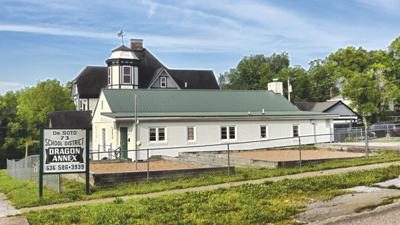
The Annex is for students who receive special education for higher needs in a building on Third Street. The ILC is the district’s alternative school for at-risk students which has been housed in the former Junior High School Library.
The district announced in January a two-phase strategic plan that Superintendent Ron Farrow said would save money, enhance collaboration among educators and strengthen the learning experience for students. One part of Phase 1, to be enacted before the start of this coming school year, originally called for the ILC and Annex to be moved to the De Soto High School basement.
However, Phipps said on June 27 that the special education program will remain on Third Street for now.
He said after discovering how much construction would cost to make the special education program work in the high school basement and hearing feedback from teachers, the district decided to explore other options.
“The long-term goal is definitely to still merge these two programs,” Phipps said. “We will be working with the bond oversight committee to determine priorities, and where these align in prioritization. This will then be reviewed with additional stakeholders to determine steps forward. Daikin/TMi will be assisting in the process as we determine how to utilize facilities and will provide insight regarding cost analysis and proper usage of spaces as we consider these and (other) possibilities for maximizing our student and staff opportunities.”
In February, the plan was to have the ILC and Annex move to separate but close-by spots in the basement with the offices of the ILC administrator and counselor in between to support both programs. Farrow has said the Annex director position will not be filled when the director retires in the future.
The MOU indicates Daikin will look at unused or underutilized space at Vineland Elementary School.
Other district needs listed on the MOU include career and technical education programs; storage and additional spaces for student programs and activities, including archery and cheer.
The district has completed several Prop 4 Dragons projects, and others are underway, with final completion expected in the summer of 2026. Those projects include heating, ventilation and air conditioning upgrades; roof repairs and replacements; technology upgrades; installation of security cameras, security film for windows; additional external lighting; and the replacement of bleachers and turf at J.C. Culwell stadium; and ADA (Americans with Disability Act) accessibility issues.
The April 2024 ballot language said if the bond issue brought in enough revenue, the district also would “acquire buses and complete other repairs and improvements to the existing facilities of the district.”
“Acquisition of buses is still on the table,” Phipps said June 27.
Other school projects
Also, during the June meeting, the De Soto Board of Education voted to pay $7,000 to D.R. & J. Trucking of De Soto to tear down a home on recently purchased property adjacent to JC Culwell Stadium. The structure was torn down the week of June 22.
Phipps told school board members that after review, it was determined the residential structure at 922 Elm St. did not provide the district any “opportunity or value.”
However, demolition would allow the district to expand parking for events and activities at JC Culwell Stadium. He also said tearing down the building also would eliminate the risk of vandalism or liability on the premises.
Phipps said bond issue funds were not used for the project, but instead came from the Fiscal Year 2025 maintenance budget.
The district voted on Feb. 20 to purchase the property from Charles Love of St. Louis for $15,000. The property butts up against the stadium’s parking lot.
“The use of the structure was not certain at the time of the purchase, but the purchase of the property itself was agreeably a wise purchase for the district as the expanded space and opportunity was worth the value of the cost,” board documents stated.