


The mill dam on the Big River at Rockford Park in House Springs will be removed within the next three years, thanks to a U.S. Fish and Wildlife grant.
The Jefferson County Council voted 6-0 on Dec. 8 to accept the $400,000 grant from the agency’s National Fish Passage Program for the project, which includes remediating the dam to restore natural water flow in the area where numerous drownings and water rescues have occurred over the years.
Councilman Scott Seek (District 5, Festus) was absent from the meeting.
The project is expected to cost $2,555,300, according to council documents.
Parks and Recreation Director Tim Pigg said the county anticipates receiving another estimated $2 million from the U.S. Fish and Wildlife agency over the next three years as the project is completed. He also said the county expects to spend about $232,000 on in-kind services, such as employee salaries and equipment.
Pigg said the project will be completed in phases, and the county will work with federal officials to seek and award project bids and monitor the project’s process.
Many details about the project are still being determined, Pigg said, adding that county officials are in “almost daily contact” with U.S. Fish and Wildlife representatives on the project, along with officials from the U.S. Army Corps of Engineers and the Missouri Department of Natural Resources.
“The objective eventually is to take (the river) back to its natural state,” Pigg said. “One part of this is to help aquatic life, and the second is obviously to improve the safety of the area. We all know it’s been a problem. By taking it back to the natural state, we’ll most likely reduce the water pressure flow through there, so it should be a safer area.
“This is going to be a betterment for all of us.”
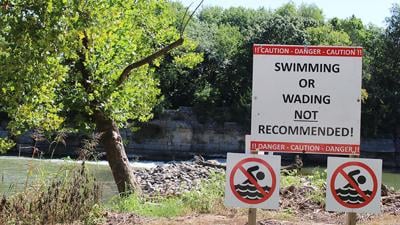
At least seven people have drowned in the Big River at the county-owned Rockford Park over the past decade. The County Council banned swimming and wading at the park in October, with a sunset clause of April 30.
The council will need to review the ordinance and take another vote to keep the ban in place after April.
While the water may look calm and inviting on the surface, officials have said powerful currents downstream of the low-head dam can suck unsuspecting swimmers underwater.
In addition, park visitors often try to swim across the Big River to a series of bluffs to jump off the rocks into the water.
Councilman Charles Groeteke (District 4, Barnhart) said he’s tried for years to get federal help to fix the dam at Rockford Park. He voted against the swimming ban back in October, citing parkgoers’ personal responsibilities and freedoms when choosing to enter the river. He said he’s hopeful that once the dam is removed, the ban will be lifted entirely.
“It’s been a long process, many meetings that I’ve attended, to try to put this all together,” Groeteke said. “Hopefully, this will solve all the problems there at the park. The main focus for Fish and Wildlife is the fish passageway, but if we can get to the end-net result goal that it saves lives too, this was a way to get to the end.”
Fish passage
Fish and Wildlife biologist Leslie Lueckenhoff said the National Fish Passage Program works with local communities that want to restore and conserve the country’s rivers or other freshwater sources.
According to project documents, removing the dam will help open the Big River to an additional 4 miles of mainstem habitat “to establish a more natural river condition” that benefits endangered species. The Big River plays host to numerous endangered mussel populations and fish species, including the pink mucket, scaleshell, sheepnose and spectaclecase mussels, as well as eastern hellbender, log perch and freshwater drum.
“National Fish Passage Program projects seek to benefit both fish and people as our agency works with local partners to remove obsolete and dangerous dams, and restore rivers to their natural state,” Lueckenhoff said. “This project was chosen through a competitive, science-based process that prioritizes ecological benefit, community safety and alignment with national and regional conservation goals.”
The project will have design, permitting and construction phases, Lueckenhoff said.
“Because this is a complex effort involving multiple partners, we anticipate that it will take several years to complete the project,” she said. “Each phase can vary in duration depending on site-specific conditions, regulatory requirements and partner capacity.”
Councilman Billy Crow (District 2, Arnold) said he’s excited the Big River will be restored to its natural flow in part due to protecting the native smallmouth bass fishery the river is known for.
“I think this is a very important project, because of the number of lives lost at Rockford Park, but also as a lifelong Jefferson County resident who was born and raised swimming and fishing on the Big River,” he said. “I’m excited that we’re moving forward in that and hope it’s one of many low water dams to be removed to restore the Big River to its natural beauty.”