


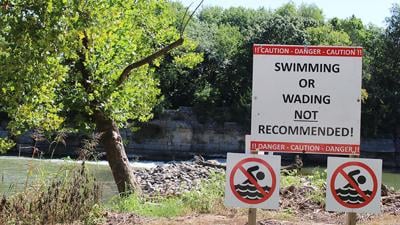

The Jefferson County Council is looking to extend a ban on swimming at Rockford Park in House Springs through the summer.
In a first reading of the bill, the council voted 5-2 to extend the sunset provision of the swimming ban to April 30, 2027. It was expected to expire April 30. The bill will need to be voted on two more times, likely at the April 27 regular meeting, before it is finally passed.
Councilmen Charles Groeteke (District 4, Barnhart) and Tim Brown (District 6, De Soto) voted against the bill. Both council members voted against the same bill when it was first passed last October.
Officials have determined that the river access at the park, 4320 Hwy. W, is dangerous for swimming and wading. While the water may look calm and inviting on the surface, officials have said powerful and strong currents underneath the surface can suck unsuspecting swimmers underwater.
Park visitors often try to swim across the Big River to a series of bluffs to jump off the rocks into the water. However, swimming across the river can be treacherous, due to a low-head dam directly upriver of the park’s access point.
The county-owned park has been the site of at least seven drownings in the last decade. The most recent incident occurred June 28, 2025, when a 44-year-old man from Overland drowned on the Big River.
If the ordinance is finally approved, the ban on swimming will sunset on April 30, 2027, unless the council votes again to extend it. The ordinance gives express permission for first responders to use the river access point for water rescue training.
Councilman Brian Haskins (District 1, High Ridge) said the county won’t allow swimming at the park’s access point until the area is deemed safe. He compared the swimming ban to installing a new stoplight or stop sign.
“You just can’t let the drownings continue,” Haskins said. “It’s no different than when somebody adds a stop sign or stoplight that wasn’t there before. There will be people who will run the light, but guess what? There will be a lot of people who will stop and obey the law, and that does create a better, safer environment. Our job is to protect people, and this is an easy thing to do.”
Multiple large signs will be placed around the park informing visitors of the ordinance, Haskins said. Since the Parks and Recreation Department does not have park rangers, Haskins said Sheriff’s Office deputies will enforce the ordinance and write tickets for those breaking the law. In December, the council approved a $400,000 grant from the U.S. Fish and Wildlife Service’s National Fish Passage Program, which will be used to remediate the mill dam at Rockford Park to restore natural water flow.
The project will be completed in phases, with the entire project estimated to cost $2.5 million. The county is expected to receive another estimated $2 million over the next three years as the project is completed.
While the U.S. Fish and Wildlife Service is primarily focused on restoring the Big River to its natural flow and protecting endangered animals, Jefferson County Parks and Recreation Director Tim Pigg previously said there’s an added safety benefit for parkgoers. He said removing the dam will likely reduce the water pressure flow through the area, which should make it safer for swimmers.
Haskins said removing the dam is a good thing but may not ultimately make the area safe enough for recreation. He said the swimming ban protects park visitors and first responders alike.
“I think it’s a good thing for first responders – it doesn’t put their lives in jeopardy,” Haskins said. “The fire department is likely never going to be there in time for the drowning, because it happens so quickly. What happens many times is that people who are watching try to help, and then they also put themselves at risk of drowning. That’s just a terrible scenario where they all drown.”