


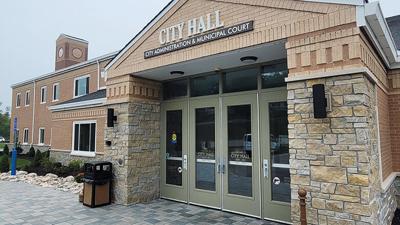
Arnold city officials plan to start accepting applications at the end of this month from subdivisions with active homeowners associations interested in receiving money from a state grant to fund the installation of streetlights, City Administrator Bryan Richison said.
The city had planned to begin accepting applications at the start of the year, but that was delayed because Arnold had not received an award letter from the Missouri Department of Public Safety (DPS) officially showing the city was eligible for $300,000 through the program. The city received the award letter from the DPS on Jan. 23, Richison said.
The deadline for HOAs to apply for the funding is March 31.
On Jan. 16, Richison told City Council members the city had not started taking applications for the grant money because it had not received the award letter.
“That is a big deal because if you spend funds before you are awarded the grant, you can’t retroactively claim those as part of the grant,” he told the council. “We need to get that official award letter to make sure the city is protected.”
The streetlight program grant is part of a Crime Prevention Pilot Program that was included in the state budget. The program was created to cover the cost for subdivisions without lights to have them installed.
State Rep. Phil Amato, who represents District 113 that includes Arnold, secured the money for the pilot program.
“I’m really happy about that,” Amato said of Arnold starting to accept applications. “It is a crime prevention pilot program. We are going to track crime statistics before the streetlights went in and crime statistics after the streetlights went in. Anybody who wants them needs to reach out to the city.”
During a Dec. 12 council work session, Richison outlined the requirements for subdivisions to apply for the streetlight program.
In order to apply for the money, a subdivision’s HOA Board of Directors will need to send a signed letter with a copy of the streetlight application process attached to the city administrator. The letter and application may be turned in to the City Clerk’s Office at City Hall, 2101 Jeffco Blvd., between 8 a.m. to 4:45 p.m. on Mondays through Fridays.
The HOA also will need to show proof that it has the authority to collect monthly fees to pay Ameren to power the lights.
According to the program’s application, Ameren will charge subdivisions approximately $23 per light per month. Ameren also requires subdivisions to commit to paying the monthly bill for 10 years.
The city will require residents to donate any needed easements or rights-of-way for the lights to be installed. The application says, “If property owners refuse to donate any needed easements or right-of-way, the city will try to work around them, but such refusals could make the installation of streetlights in a subdivision not feasible.”
The cost of installing the lights will be paid for with the funds from the state grant.
Richison said the city does not have an estimate for the cost to install a streetlight, and he does not know how many streetlights could be funded through the grant.
“If I can find ways to streamline it, I will,” Richison said for the application process.
Delay
On Jan. 16, Ward 2 Councilman Bill Moritz asked why the city had not yet made the applications available to subdivisions, and he expressed frustration that the program had not started since it was approved in the state budget in May and the current state budget cycle started in July.
Moritz said Bayshore, an older subdivision off Telegraph Road in the southeast corner of Arnold, is ready to apply for the funds to have streetlights installed.
“My thought is between all the time the city administrator (Richison) and city attorney (Bob Sweeney) had on this thing, they could have had something in place right now ready to rock ’n’ roll,” he said. “That is what I am pressing for them to do. I expressed my unhappiness with their slow walking, and hopefully, we can get past that.”
Richison said the state budget authorizing the grant money went into effect July 1, 2024, and the DPS did not open the application for the grant until Sept. 19, 2024, adding that he submitted the city’s application on Oct. 4, 2024, before the Oct. 10 deadline.
On Nov. 2, 2024, Richison said he participated in a Zoom call with the DPS and Amato to discuss the grant process. During that call, the DPS said Arnold would receive the $300,000 up-front and would need to submit paid invoices to show how the money was spent.
However, he said in December, the DPS changed the process to the traditional procedure of Arnold paying for the work up-front and submitting invoices to be reimbursed.
Richison said the change from Arnold receiving the money up-front to needing to submit invoices for reimbursement changes the timeline for the city to receive state funding. If the city had received all the grant funds at once, there would have been no time limit on when grant funds could be spent. Now the city has to pay up-front and send invoices by June to get reimbursed before the funds dry up.
“I was told that any invoices submitted after the middle of June were not likely to be processed in time for reimbursement before the state budget ends on June 30 and the money goes away,” he said. “It took DPS nearly seven months to award us the grant, but we now have less than four and a half months to spend it. This process has been slow, but as the facts show, it was DPS, not the city, who are responsible for the delays.”
Amato said he wished Richison had reached out to him about the city not receiving the award letter after the November Zoom meeting with the DPS and he could have checked on it.
“That didn’t happen. That is all right, we are moving on.”
Richison said he discussed the grant with Moritz multiple times after the November Zoom meeting.
“Councilman Moritz also told me he was in frequent contact with Representative Amato about the grant program,” Richison said. “If Representative Amato was unaware we had not received the grant award letter, it was because Councilman Moritz did not share this information with him.
“My conversations with the Missouri Department of Public Safety have been positive and productive. I do not know why it has taken so long for the grant award letter to be sent, but I have no reason to believe that DPS was purposefully dragging their feet.”
In 1992, Arnold started requiring developers to have streetlights installed in subdivisions at the corner of every intersection and approximately every 300 feet throughout the subdivisions. That requirement did not apply to older subdivisions.
The city’s new streetlight program funded by the state grant does not require subdivisions to install streetlights.
“This is not mandatory,” Amato said. “I am just trying to help people.”