


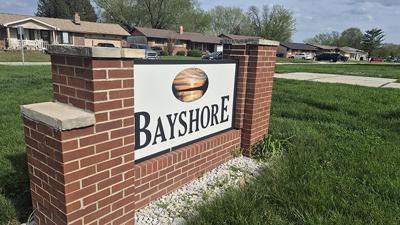
The largest subdivision in Arnold will soon have streetlights.
James Pogorzelski, interim Public Works Department director, said Reinhold Electric of St. Louis started marking light locations on April 20, and the company is expected to have the conduit system for the lights completed by mid-June in the subdivision off Telegraph Road.
Pogorzelski said Ameren will then install the 43 streetlights. On April 23, he said he does not know how quickly Ameren will be able to install the lights.
Arnold paid Reinhold $217,000 to construct the conduit system in Bayshore, which includes Bayshore Parkway, Biscayne Boulevard, Boca Raton Drive, Ballast Point Drive, Bal Harbor Drive, Los Olas Boulevard, Surfside Drive, Bayvue Boulevard and Causeway Drive.
Reinhold submitted the lowest of two bids for the project, according to city documents.
Arnold also paid Ameren $79,724.46 for engineering and easement acquisition services for the Bayshore subdivision street lighting project.
The city will be reimbursed for half of the $296,724.46 project through a grant administered by the Missouri Department of Public Safety.
City Administrator Anthony Traxler said Arnold will pay the remaining $148,363.73 with money from its portion of Jefferson County’s 1/2-cent sales tax for road and bridge projects. The county keeps the bulk of the money from the tax to use throughout unincorporated Jefferson County and then distributes the rest to cities based on population and road miles in those cities.
Arnold City Council members voted unanimously on April 2 to approve both Reinhold and the Ameren deals.
The streetlight program is available because Arnold is eligible for a Crime Prevention Pilot Program that was part of the 2024 state budget. The program was created to cover the cost for subdivisions without lights to have them installed.
State Rep. Phil Amato, who represents District 113 that includes Arnold, secured $300,000 for the pilot program. The money is only available through June.
“I’m really excited about it,” Amato said. “Bayshore is still after all of these years the largest subdivision in the city of Arnold. It was built before the mandate by the planning commission and council 30 years ago that all new construction have streetlights and sidewalks. This is exciting.”
In order to get streetlights, a subdivision’s HOA Board of Directors needed to send a signed letter with a copy of the streetlight application attached to the city administrator to request funding. The HOA also needed to show proof that it has the authority to collect monthly fees to pay Ameren to power the lights.
According to the program’s application, Ameren will charge subdivisions approximately $23 per light per month. Ameren also requires subdivisions to commit to paying the monthly bill for 10 years.
The city also required residents to donate any needed easements or right of ways for the lights to be installed. The application said, “If property owners refuse to donate any needed easements or right of way the city will try to work around them, but such refusals could make the installation of streetlights in a subdivision not feasible.”
Mayor Bill Moritz, who was a Ward 2 councilman when the pilot program was created, said he is glad to see the streetlights are being installed. Bayshore is in Ward 2.
“I’m ecstatic,” Moritz said. “We have to get this done by the middle of June or we are going to have to return the money. I have been pressing on this for two years. It is about time. If we hadn’t had the delays, we may have gotten another subdivision done. I am very happy, and I know they are, too.”
Delay
Arnold officials previously said the streetlight program was delayed because the Missouri Department of Public Safety (DPS) did not provide a letter stating the city was part of the program until seven months after it was approved as part of the 2024-2025 state budget.
In January 2025, former City Administrator Bryan Richison said the state budget that authorized the grant money went into effect July 1, 2024, and the DPS did not open the application for the grant until Sept. 19, 2024.
He said he submitted the city’s application on Oct. 4, 2024, before the Oct. 10 deadline.
On Nov. 2, 2024, Richison said he participated in a Zoom call with the DPS and Amato to discuss the grant process. He said during that call the DPS said Arnold would receive the $300,000 up front and would need to submit paid invoices to show how the money was spent.
However, he said in December 2024, the DPS changed the process to the traditional procedure of Arnold paying for the work and submitting invoices to be reimbursed.
Richison said the change from Arnold receiving the money at once to needing to submit invoices for reimbursement changed the timeline for the city to receive state funding. He said if the city had received all of the grant funds at once, there would be no time limit on when grant funds could be spent.
Richison said the city received the award letter from the DPS on Jan. 23, 2025.
Moritz said he is glad Bayshore residents will have streetlights in their subdivision, but he said more Arnold subdivisions could have been part of the program.
“We piddled the money away with such a delay,” he said. “It was a needless delay. I’m glad the lights are coming. Now, let’s see if they will do what we expect them to do.”
Program goal
Amato said crime rates in Bayshore before the lights were installed will be compared to crime rates after the lights are in the subdivision.
Moritz said he hopes the project is successful because then Amato will be able to ask the Legislature to expand the grant program to the entire state.
“We want to see if there is any kind of a drop (in crime rates) that is measurable to see if the lights make a difference,” Moritz said. “Then we can go back, and Phil can try it again.”
Amato said one of the biggest hurdles for the program is how subdivision residents will pay the electric bill for the streetlights. He said because Bayshore had an active HOA, that was not a problem.
However, he said there are many subdivisions that had HOAs at one point, but those HOAs had stopped being active and collecting money from residents.
For subdivisions without HOAs, Amato has explored having cities do special assessments of subdivisions so Ameren would be able to send electricity bills to a city, which would then collect the money from subdivision residents.
He also said he has looked into Ameren charging individual households for the streetlights’ electricity bill.
“That is going to be a big hurdle,” Amato said. “I have a bill in the Legislature now that would allow Neighborhood Improvement Districts to be able to collect for (streetlight electricity bills). I have no expectations that the bill will make it to the finish line this year.”
Amato said an important part of the program is that it is voluntary for subdivision residents.
In 1992, Arnold started requiring streetlights to be installed by developers of subdivisions at the corner of every intersection in a subdivision and approximately every 300 feet throughout a subdivision. That requirement did not apply to existing subdivisions, and the new streetlight program funded by the state grant does not require subdivisions to install streetlights.
“Nobody was forcing anything,” Amato said. “I got some money out of the state budget, and if you want to participate, that is fine.”