





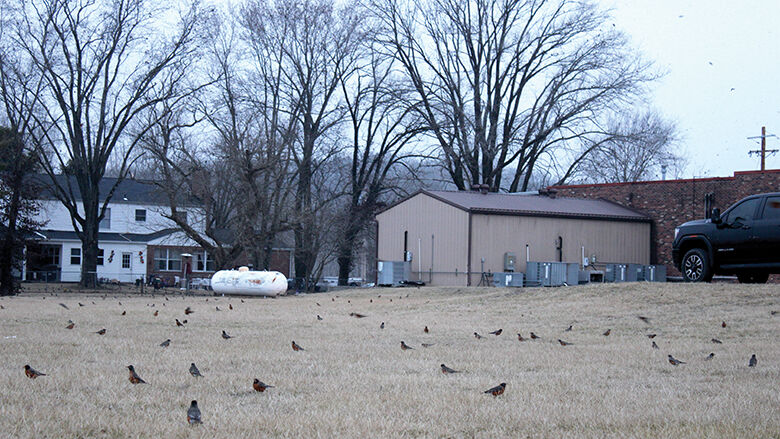
Birds of a feather are flocking together at Radeackar’s Market in Cedar Hill.
For at least the past month, thousands of robins have been nesting in the trees lining the grocery store’s parking lot, 6771 Mall Drive.
Assistant store manager Rob Baranowski said the birds are there early in the morning when he arrives for work, scatter during the day and then return around sunset.
“They go from one area to the next and then come back in the evening,” Baranowski said. “I honestly don’t know why – maybe to find food? Early in the morning, you’ll see them more, and in the evenings, they’ll come back – almost like they go forage for food and then they come back home.”
Radeackar’s Market is now the home to thousands of robins, who flock to the area for its safety and accessible resources.
Baranowski said the birds aren’t like those in the classic Alfred Hitchcock movie and don’t cause any fuss – no pecking at customers or causing any damage.
“Honestly, we haven’t seen any of that kind of stuff (bird waste),” said Baranowski, who has worked at Radeackar’s for a little more than a year. “With that many birds, you would think of the waste being everywhere, but it’s not.”
A regular Radeackar’s customer, Joey Drennon, said he noticed the large flock of birds hanging out around the store a few weeks ago, adding that they seem especially active between 4:30 and 5 p.m., when he is returning home from work at the Hillsboro Public Works Department.
“It is something else to watch it happen,” he said. “It’s every day, like clockwork. It looks like they’re coming from the east. They’re really cute – they’ve got fat, red bellies and they’re fun to watch.”
Drennon said the flocks of birds swoop low and land in the grass to the east of the grocery store or perch in the trees lining the parking lot, but amazingly don’t land on any cars, shopping carts or customers.
After viewing photos and videos of the birds at Radeackar’s, Dan Zarlenga, a media specialist with the Missouri Department of Conservation, confirmed they were robins.
Zarlenga said there are many reasons a large group of robins would gather at one location for extended periods, including extremely cold weather.
“Obviously, in the last couple of days we haven’t had so much of it, but we had cold weather recently, excessively cold weather,” Zarlenga said. “When you snuggle up with somebody, it’s warmer than if you’re by yourself. It’s the same thing when birds are putting their bodies together. It kind of helps them through the cold weather.”
Zarlenga said the opposite may also be true: after a few weeks of cold weather, robins are eager to search for bugs and worms to fill their stomachs. The robins may be more active in their search for food when the weather is nicer.
Most birds look for certain conditions before hunkering down for a long winter night, Zarlenga said, including adequate food and water sources, a feeling of safety and hardy evergreen trees to break the biting wind.
“If it’s windy, cold, or whatever, they’ll find trees, especially evergreen trees, that kind of brace them from the wind and cold,” he said.
Zarlenga also said birds “puff up their feathers” to get warmer.
“It’s kind of like wearing a puffy jacket,” he said. “It creates a layer of air around their body that warms them up.”
Another reason the robins may be drawn to the area around Radeackar’s, Zarlenga said, is its proximity to the Big River.
“A lot of birds will hang out near the river because a lot of times there are more animals for a bird of prey to go after or more vegetation or resources to choose from,” Zarlenga said. “They may go around the river during the day and then they need to find somewhere in that vicinity to stay. It’s kind of like going on a vacation; you go around someplace cool during the day but then you go back to the hotel for the night.”
Zarlenga said not every bird migrates south for the winter, and that migration can be relative; a northern bird may choose to spend winter in Missouri because it’s warmer than its usual home.
“There are always birds around,” Zarlenga said. “The species mix may differ, and the number of birds, granted, is higher in the spring. Cardinals are one of the birds that stay. You see them in the middle of winter, even in the snow.”
While the influx of robins to one specific grocery store may seem like a freak occurrence, Zarlenga said it isn’t so strange; just like humans, birds want to find a safe place to rest, and it appears as though Radeackar’s has fit the bill.