


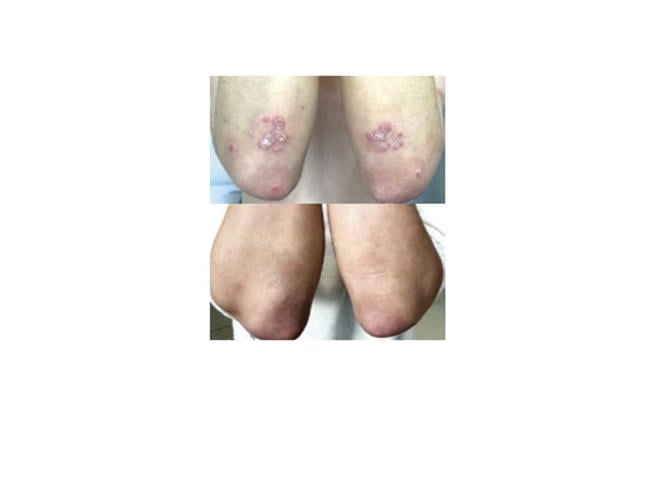
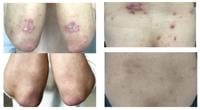
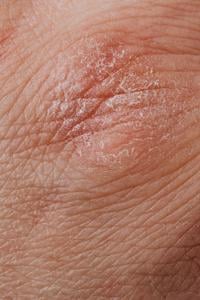
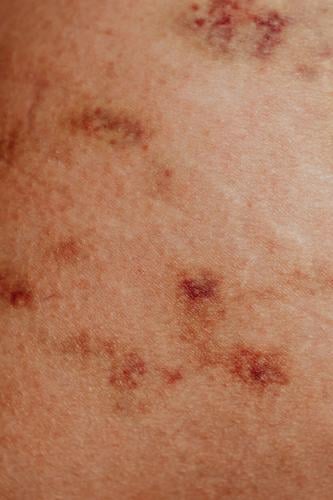
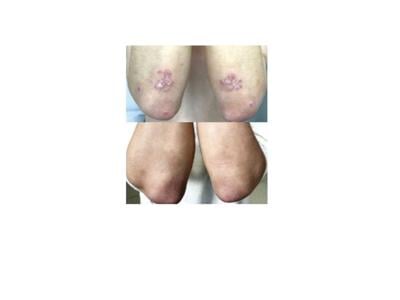
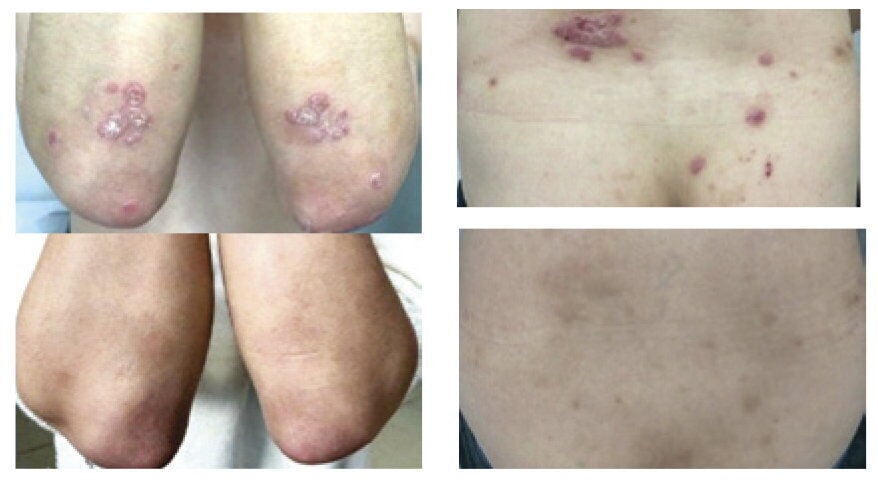
Psoriasis patients prescribed pantethine capsules in addition to topical ointments show a marked improvement in symptoms after 3 months of treatment (bottom). (2026 Cao et al. via SWNS)
By Stephen Beech
Nutritional supplements could treat a common skin disease with no known cure, suggests new research.
Scientists say the vitamin derivative pantethine showed “encouraging” results for reducing skin inflammation in mice with psoriasis.
And it also showed potential benefits in human patients when used in combination with other treatments, according to the study.
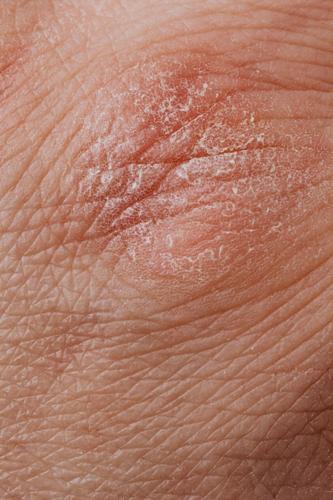
Psoriasis causes a rash with itchy, scaly patches, most often on the knees, elbows, trunk and scalp.
It can be painful, interfere with sleep and make it hard to concentrate, and there is no known cure.
Now researchers in China have discovered that the vitamin B5 derivative pantethine limits the activity of immune cells that are key contributors to autoimmune diseases such as psoriasis.
Their findings, published in the Journal of Experimental Medicine (JEM), show that pantethine prevents the development of psoriasis in mice and also helps alleviate the symptoms of psoriasis patients in a small-scale human trial.

(Photo by kaboompics via Pexels)
The Chinese team explained that dendritic cells are specialized immune cells that help to coordinate the different parts of the immune system.
They can engulf and present foreign antigens to activate highly specific T cells, as well as secrete a range of immune signaling molecules to recruit other types of immune cells and promote inflammation.
Because of their central role in directing immune responses, aberrant activation of dendritic cells is believed to underlie several autoimmune diseases, including psoriasis.
Study co-lead author Wei-Na Zhang said: “Emerging evidence highlights that metabolic pathways and their associated metabolites play vital roles in regulating immune cell function and autoimmune progression.
“But therapeutic strategies targeting metabolism in inflammatory diseases remain underexplored.”
The Chinese researchers discovered that the levels of metabolic enzymes known as Vanins are elevated in the dendritic cells of patients with psoriasis and several other autoimmune diseases.
Depleting those enzymes inhibited dendritic cell activation and limited their ability to activate T cells.
And treating mice with a drug that inhibits Vanins prevented the animals from developing psoriasis.

(Photo by kaboompics via Pexels)
Zhang said Vanin enzymes convert the metabolite pantethine into vitamin B5, an essential nutrient required for cellular energy production.
Pantethine is a widely available nutritional supplement often used to lower blood cholesterol levels due to its ability to inhibit cholesterol synthesis.
Zhang, from the State Key Laboratory of Biomedical Analysis in Beijing, said cholesterol had previously been shown to promote the activation of dendritic cells, and high blood cholesterol is a major risk factor for the development of psoriasis.
The Chinese team determined that increased Vanin activity in dendritic cells reduces panthetine levels, leading to increased cholesterol synthesis and dendritic cell hyperactivation.
Replenishing pantethine levels reversed the process, lowering the accumulation of cholesterol and suppressing dendritic cell activation.
Zhang said: “We found that pantethine administration effectively alleviated psoriasis in mice, suggesting that insufficient pantethine levels may be the crucial contributor to hyperactivation of dendritic cells and autoimmune inflammation following the up-regulation of Vanins.”
The researchers conducted a small-scale trial of pantethine supplementation in 24 human psoriasis patients.
Each patient was treated with ointment, but half of the patients also received pantethine tablets.
Over the course of 12 weeks, patients given the additional pantethine treatment showed improved symptoms, particularly if they had elevated blood cholesterol levels to begin with.
Zhang added: “Our investigator-initiated clinical trial demonstrated encouraging therapeutic efficacy of pantethine as an adjunctive therapy in psoriasis, but these findings should be interpreted as proof-of-concept for clinical feasibility rather than direct mechanistic validation.
“Overall, our study uncovers the Vanin-pantethine-cholestrol axis as a key metabolic pathway governing dendritic cell activation and provides a foundation for therapeutic strategies targeting several dendritic cell-mediated autoimmune diseases.”