



“You’re too quiet.”
If I had a dollar for every time I heard that sentence in my life, I’d have, well, a LOT of dollars.
And if you’re among the 30-50 percent of the population who are introverts, I’m betting your net worth would be a lot higher as well.
Introversion is not, as many people think, the same as being shy or awkward. It’s about how you gain and use social energy. Introverts gain energy by being alone or in quiet calm spaces and lose energy as they interact socially with others, and because of that tend to be quieter and more thoughtful. Extroverts are just the opposite and gain energy by interacting socially with other people and tend to be more gregarious and talkative.
Does being around large, loud groups of people at festivals, concerts or crowded bars wear you out or overwhelm you quickly? Does the thought of participating in “getting to know you” ice breakers with strangers sound about as appealing as being waterboarded? Does a quiet weekend alone in a cozy cabin reading books sound like a dream vacation? Congratulations, you might be an introvert.
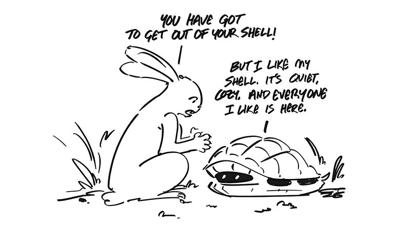
In my lifetime of being an introvert, I’ve seen countless advice columns for how to act more extroverted and “get out of my shell!” Being an extrovert is seen as the default setting that introverts should work to attain. Never have I seen an advice column telling extroverts how to tone it down and act more like their introverted counterparts.
Well, I have decided to be the change I want to see in the world, so here are my tips for how the extroverted can be more thoughtful and talk less.
As with all advice columns, not all tips apply to everyone. However, these tips are based on behaviors I have seen countless times that can be off-putting to introverts like myself.
Listen
By listen, I don’t mean just be quiet while impatiently waiting for your turn to speak. Listen to and consider what other people are saying. The point of having a conversation is to exchange information with someone else. People can tell when you aren’t listening to them. Introverts find this particularly irritating, as participating in a conversation is already somewhat mentally draining for them, so it adds insult to injury when they see they’ve made the effort for no reason.
Don’t interrupt
I know, I know, the point you want to make is super-duper important. However, when you cut off someone who is speaking, you are inadvertently telling that person you think what he or she has to say is unimportant. If you are trying to be friends with an introvert, interrupting them too many times will result in them no longer wanting to speak to you at all. Remember the part about socializing being an energy drain for them? They’re not going to willingly drain their energy for you if you can’t even let them finish their 35-second story.
Ask questions and be curious
Not only should you not interrupt other people when they are speaking, but you should also ask follow-up questions to show you care. If someone tells you a story about their dog, when they are finished, don’t just immediately start telling a story about your dog. It feels like you are just trying to one-up their story. Asking follow-up questions reassures an introvert their thoughts are important to you and will help make them more comfortable sharing their thoughts with you in the future.
Think before you speak
Think about why you are speaking before you start talking. Nobody wants to hear your stream of consciousness. Take some time to process your thoughts. You’ll sound more intelligent, be less likely to put your foot in your mouth or offend or annoy someone with careless talk.
Don’t offer opinions on subjects you don’t know much about
Are you adding something valuable to the conversation by chiming in? Or are you merely repeating talking points you’ve heard with minimal knowledge on the subject? If your point is obvious, the other person has probably already considered it themselves. Just because you can come up with an opinion to share doesn’t mean you have to. “I’m not familiar with the topic” and “I’ll have to do more research and get back to you” are perfectly good responses.
Don’t engage in pointless small talk
Nobody will die if silence is not constantly filled. In fact, some people enjoy silence. If you absolutely must engage in small talk, at least do it with people you know and don’t force your chit-chat on unsuspecting strangers. And for goodness’ sake, definitely don’t force people in customer service positions to listen to your pointless chatter. Yes, they may be smiling and nodding, but that is not an indication whatsoever they are enjoying it.
Don’t share random facts about yourself with strangers
The young man in the breakfast aisle doesn’t care what cereal your 3-year-old grandson prefers. The lady picking out new hand towels could not care less about your bathroom color scheme. They’re never going to see or speak to you again. Why on Earth would they care to hear that information? More importantly, why would you want them to know it?
Pick up a solitary hobby
Try out a hobby you can do alone, such as gardening, reading, creative writing, painting, drawing, playing an instrument, jogging. Just because you’re by yourself doesn’t mean you have to be lonely. If you’re good company, you can be your own best friend!
So there you have it. You are now prepared to try out your new conversational skills as an introvert! So go out there and get started!
Oops! That was a test. Introverts don’t want to go out in the world to try out their conversation skills. Did you pass?
Offended extroverts: please send your angry letters to the editor to news@myleaderpaper.com.